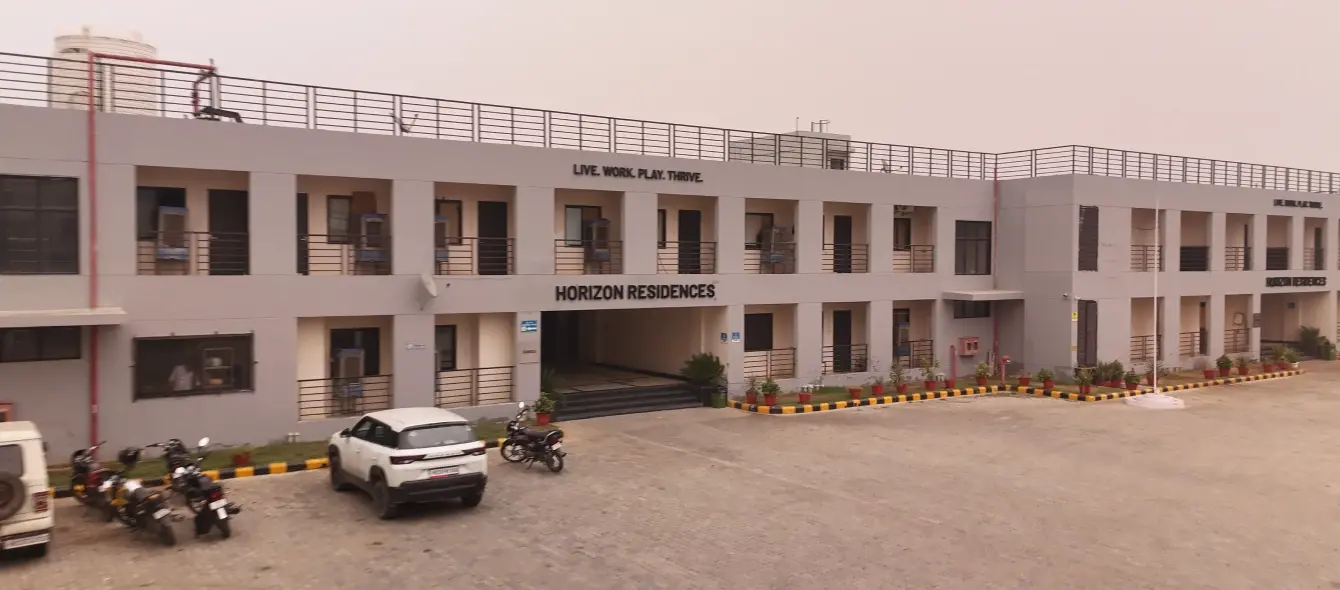




Synopsis: Institutional developers of modern industrial parks are approaching safety as an infrastructure-led discipline. As warehousing and manufacturing operations grow in scale and complexity, Grade A industrial park and warehouse developers are embedding safety into park master plans, building design, and operational frameworks – guided by global standards. From human-centric park design and structured industrial safety training to fire resilience and digital monitoring, this approach ensures that safety is not an afterthought but a foundational design principle – one that protects people, goods, and supply chain continuity.
How Are Modern Industrial Parks Redefining Workplace Safety And Productivity?
Industrial parks today house a complex mix of warehousing, manufacturing, and logistics operations – environments where people, heavy machinery, automation, and high-throughput inventory movement converge. In such settings, even minor safety lapses can cascade into operational disruptions, supply chain delays, and workforce harm.
Recognising this, leading industrial park and warehouse developers are moving beyond reactive compliance toward a proactive, infrastructure-first approach to safety. Within Grade A industrial park environments, safety is now designed into the master plan – at the park level through road networks, circulation design, and shared amenities, and at the warehouse level through structural specifications, fire systems, and ergonomic interiors. This distinction matters: safety at the park level (roads, common areas, security perimeters, emergency response infrastructure) creates the ecosystem within which individual warehouses or factories can operate safely.
This shift – from safety as a warehouse-level operational discipline to safety as a park-level design philosophy – is what defines the next generation of industrial infrastructure in India.
What Safety Standards Govern Grade A Industrial Parks And Warehousing In India?
Safety in industrial and warehousing environments is a structured discipline governed by well-established national and international standards. Understanding these frameworks is essential for park and warehouse developers, occupiers, and investors alike:
-
- ISO 45001 (Occupational Health & Safety Management Systems): The global benchmark for workplace safety management. ISO 45001 provides a Plan-Do-Check-Act framework for hazard identification, risk assessment, worker participation, and continuous improvement. It replaces the older OHSAS 18001 standard and is increasingly adopted by industrial park developers and occupiers in India to systematise safety across operations.
- National Building Code of India (NBC 2016): Provides mandatory guidelines for building design, fire safety, structural safety, and accessibility across industrial and commercial structures. Grade A industrial parks are designed in compliance with NBC specifications for fire protection, means of egress, and occupational safety.
- The Factories Act, 1948 & Occupational Safety, Health and Working Conditions Code, 2020: India’s primary legislative framework governing workplace safety in factories and establishments, covering ventilation, lighting, hazardous processes, working hours, and welfare provisions.
- IGBC Green Logistics Parks and Warehouses Rating System: India’s first dedicated green building certification for logistics parks and warehouses, launched by the Indian Green Building Council (CII-IGBC). The rating evaluates energy efficiency, water conservation, occupant health, and safety infrastructure – making it directly relevant to how parks and warehouses are designed and operated.
- GRESB (Global Real Estate Sustainability Benchmark): The leading ESG benchmark for real estate and infrastructure investments. GRESB assessments evaluate health and safety protocols, building certifications, and occupant wellbeing at the asset and portfolio level – making safety performance a key factor in institutional investment decisions.
- NFPA and BIS Standards for Fire Safety: Standards such as NFPA 13 (sprinkler systems), NFPA 24 (private fire service mains), and relevant Bureau of Indian Standards (BIS) codes govern fire detection, suppression, and evacuation infrastructure in large-format industrial and warehousing facilities.
Together, these standards create a structured, multi-layered safety architecture that Grade A industrial parks must embed from the design stage itself.
Why Is Workplace Safety Becoming A Strategic Priority In Logistics Parks And Warehousing Operations?
The scale and intensity of modern logistics and manufacturing operations have fundamentally changed the risk landscape. The rise of e-commerce fulfilment, just-in-time manufacturing, and high-throughput distribution has increased movement density within both warehouses and across industrial park campuses. Automation, multi-shift operations, and heavy equipment usage further amplify complexity.
Global workplace safety data consistently shows that warehousing and logistics environments report higher-than-average incident rates. Common risk factors include:
-
- Equipment-pedestrian interactions in shared movement zones
- Manual handling injuries from repetitive lifting and stacking
- Falls from height in high-bay racking environments
- Fire and electrical hazards from dense storage and packaging materials
- Fatigue-related errors during extended or night shifts
Critically, safety failures do not only impact individual workers. A single incident can halt warehouse operations, disrupt supply chains, damage inventory, delay customer commitments, and create cascading disruptions across logistics networks. For institutional investors and ESG-conscious occupiers, safety performance is also a material factor in portfolio risk and GRESB scoring. This makes safety not just an operational concern, but a strategic and commercial imperative.
How Does Grade A Industrial Park Infrastructure Improve Worker Safety?
Safety begins with infrastructure – and in a Grade A industrial park, this means designing safety at two distinct but interconnected levels:
At the Park Level:
-
- Wider internal roads with segregated circulation paths for trucks, forklifts, and pedestrians
- Dedicated pedestrian walkways connecting buildings, amenity zones, and parking areas
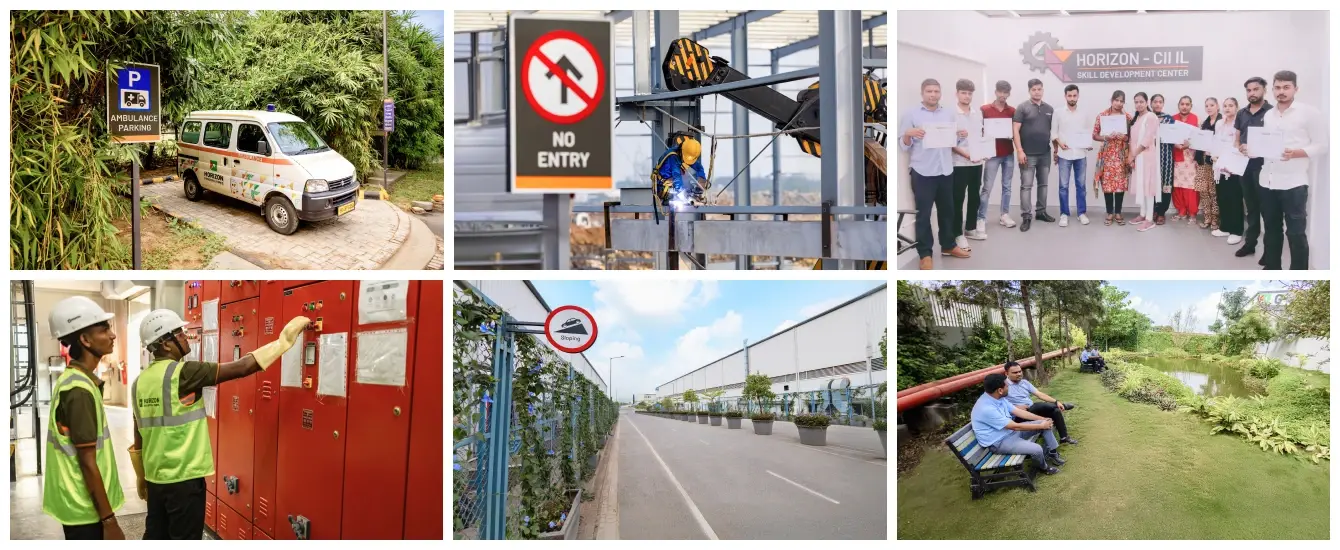
- Centralised emergency response infrastructure, including fire stations, ambulance standby, and first-aid centres
- 24×7 CCTV surveillance and secured, fenced boundaries with controlled access points
- Driver rest areas to reduce fatigue-related risks from long-haul drivers during loading and unloading
- Landscaped zones, breakout areas, and green spaces that reduce cognitive fatigue and improve alertness
At the Warehouse or Factory Level:
-
- Wider column spacing and flexible layouts for safer equipment movement and reduced bottlenecks
- Demarcated zones for pedestrian walkways and material handling equipment within operational floors
- Clear signage, adequate lighting, and ventilation systems designed for occupant comfort and visibility
- Barrier-free accessibility including ramps and intuitive navigation for workers and visitors
- Clearly defined loading and unloading bays to minimise operational conflict at dock areas
When safety is embedded at both levels, operational discipline becomes easier to maintain, and the entire park ecosystem functions as a safe, productive environment.
How Does Human-Centric Warehouse Design Improve Safety And Productivity?
The concept of human-centric warehouse design has gained significant traction in industrial real estate, driven by global benchmarks such as GRESB and India-specific certifications such as the IGBC Green Logistics Parks and Warehouses Rating System. Both frameworks emphasise that safety and occupant wellbeing are not separate considerations but core design parameters.
Key human-centric design principles recommended by these frameworks include:
-
- Natural lighting and ventilation to improve alertness, reduce respiratory issues, and minimise dependence on artificial systems
- Thermal comfort and air quality management within warehouses and factories to reduce heat stress and fatigue
- Ergonomic workstation design that minimises physical strain from repetitive tasks, particularly in fulfilment and manufacturing environments
- Shaded rest zones, medical rooms, and hydration stations within the park campus to support worker recovery during shifts
- Gender-sensitive sanitation facilities and accessible design for a diverse workforce
- Green landscaping, Miyawaki forests, and recreational spaces that reduce cognitive fatigue and improve overall workplace satisfaction
Research consistently shows that worker fatigue is a leading contributor to workplace accidents. By incorporating human-centric features into park and building design, industrial park and warehouse developers directly reduce incident risk while improving workforce retention and productivity – outcomes that are increasingly valued by GRESB-participating investors.
How Do Safety Training And GEMBA Walks Improve Warehouse Safety Culture?
Infrastructure alone does not guarantee safety. Even the most well-designed parks and warehouses require a robust culture of safety awareness, continuous training, and on-ground engagement. This is where structured industrial safety training programmes and shop floor exercises such as GEMBA walks become essential.
Safety Training and Awareness:
-
- Induction-level and industrial safety training for all new workers, contractors, and visitors entering the park
- Periodic refresher training on hazard identification, PPE usage, fire response, and emergency evacuation procedures
- Toolbox talks and daily safety briefings before shift commencement, particularly in high-activity zones such as loading docks and racking areas
- Specialised training for equipment operators (forklifts, reach trucks, conveyor systems) aligned with ISO 45001 competence requirements
- Safety awareness campaigns, mock drills, and annual Safety Week observances to maintain organisational vigilance
GEMBA Walks – Continuous Improvement on the Shop Floor:
Originating from lean manufacturing principles, the GEMBA walk (from the Japanese word meaning “the real place”) involves park and facility managers walking through operational areas to observe processes, engage with workers, and identify safety risks in real time. Unlike traditional audits, GEMBA walks are not compliance inspections – they are collaborative exercises aimed at continuous improvement.
Effective GEMBA safety practices include:
-
- Scheduled walkthroughs across warehouses, factories, loading bays, and common areas
- Observation of work processes, equipment condition, housekeeping, and PPE compliance
- Open dialogue with workers using structured questioning (such as the 5 Whys method) to identify root causes of unsafe conditions
- Documented observations with follow-through on corrective actions, tracked to closure
- Multi-level participation – from team leaders and supervisors to senior management – demonstrating leadership commitment to safety
When combined with infrastructure-level design and digital safety systems, regular GEMBA exercises create a feedback loop that ensures safety standards are not just met on paper, but lived on the ground.
How Do Warehouse Management Systems And Digital Monitoring Improve Safety?
Digitalisation is becoming a critical enabler of safety in Grade A warehouses. Warehouse Management Systems (WMS) and IoT-enabled monitoring provide visibility across inventory, equipment, and movement flows:
-
- Digital inventory tracking reduces unnecessary manual handling, lowering the risk of lifting injuries and collision incidents
- Optimised movement planning reduces congestion within warehouses and across park roads
- Predictive maintenance alerts for equipment reduce the likelihood of mechanical failures during operations
- Environmental monitoring – including temperature, humidity, and air quality sensors – improves safety for specialised goods and worker comfort
- Predictive analytics help operators anticipate peak congestion periods and adjust operations to reduce risk
As warehousing and manufacturing operations grow more complex, digital safety systems are becoming essential complements to physical infrastructure and human training.
Why Are Fire Safety Systems Critical In Modern Logistics Parks And Warehouses?
Fire risk remains one of the most significant safety considerations in large-scale industrial and warehousing environments. High-density storage, packaging materials, and continuous equipment usage increase potential exposure. Modern industrial parks address fire safety through a multi-layered approach:
-
- Automated fire detection and suppression systems, including sprinkler networks compliant with NFPA and NBC standards
- Hydrant systems, smoke detection, and emergency lighting across all operational and common areas
- Park-level coordinated fire safety systems and infrastructure that serves multiple warehouses and factories within the campus
- Structured evacuation planning, clearly marked escape routes and assembly areas, and regular fire drills conducted with tenant participation
- Quick-response emergency systems manned by trained professionals with ambulance standby
In an industrial park setting, the advantage is coordinated response: fire safety systems and infrastructure is designed at the campus level, ensuring resilience even during unforeseen incidents across multiple tenant facilities.
How Does Facility Design Protect Goods And Ensure Supply Chain Continuity?
Safety in warehouses and factories extends beyond workforce protection to encompass goods safety and supply chain resilience. Improper stacking, inadequate zoning, and poor movement planning can damage inventory – leading to delays, returns, and additional handling that compounds operational risk.
Grade A industrial and warehousing infrastructure supports this through zoning flexibility (allowing goods to be stored and handled per their specific requirements), controlled access zones, clear labelling systems, and proper storage planning. Temperature-sensitive products, fragile goods, and high-value materials each benefit from purpose-built storage environments within the park ecosystem. In this sense, goods safety and workplace safety are deeply interconnected – improving one invariably strengthens the other.
Horizon Industrial Parks: How We Embed Safety Into Infrastructure?
Horizon Industrial Parks, India’s largest pure-play industrial and logistics platform, embodies this infrastructure-first approach to safety across its 45+ parks in 10 major regions. As a Blackstone portfolio company, Horizon operates with institutional-grade safety standards embedded into every layer of park design and operations:
-
- All operational parks are IGBC Platinum-certified ensuring that green building and occupant safety standards are met from design through operations.
- Human-centric design is a default standard – naturally lit, well-ventilated workspaces; medical rooms; shaded breakout areas; gender-sensitive sanitation; drinking water stations; and meditation/rejuvenation zones are built into every park.
- 100% safety commitment with 24×7 CCTV coverage, fenced boundaries, automated fire detection and suppression systems, quick-response emergency systems manned by trained professionals, ambulance standby, and first-aid centres across all parks.
- Regular safety drills, health camps, and tenant engagement programmes that build a culture of collaborative safety awareness across the park ecosystem.
- Skill development programmes, training youth in warehousing operations, industrial standards, and safety practices – bridging workforce gaps while embedding safety awareness from the ground up.
- ESG-aligned operations with GRESB reporting, EHS audits, wellness programmes, and sustainability practices – including renewable power, water recycling, and urban forests – that contribute to both environmental and occupational safety.
- Safety & Health Week observances and safety pledge initiatives that bring together tenants, workers, and park management in collaborative safety activities – making safety both a priority and a shared culture.
By integrating global best practices with India-specific operational realities, Horizon demonstrates that safety and productivity are not competing priorities – they are mutually reinforcing outcomes of thoughtful industrial park design.
Why Is Safety Becoming the Foundation of Future Industrial Infrastructure?
As India’s industrial and logistics sector scales to meet the demands of a growing economy, safety is becoming a defining feature of modern infrastructure – and a critical differentiator for Grade A industrial parks. Human-centric design aligned with IGBC and GRESB recommendations, structured industrial safety training and GEMBA exercises, digital monitoring, and resilient fire safety systems are converging to create safer, more productive logistics and manufacturing ecosystems.
The result is a new generation of industrial parks – designed not just for operational efficiency, but for long-term resilience. Because in modern industrial infrastructure, safety is no longer about preventing accidents alone. It is about creating environments where people, goods, and operations perform at their best – consistently, safely, and sustainably.