



Synopsis : As industrial operations become increasingly energy-intensive, warehouses are evolving beyond their traditional role as storage and distribution facilities. The growing adoption of automation, cold-chain infrastructure, electrified transportation and renewable energy is creating new demands on industrial power systems. This blog explores how Battery Energy Storage Systems (BESS) can help warehouses and industrial parks improve energy resilience, optimize renewable energy usage, manage peak demand and support operational continuity. It also examines the factors driving battery storage adoption, the challenges slowing deployment in India and why industrial parks are uniquely positioned to support future energy ecosystems. As the intersection between energy and industrial infrastructure continues to deepen, the article highlights how energy-ready developments could become a key differentiator in the next generation of industrial and logistics real estate.
As energy demand rises and battery storage becomes more viable, industrial and logistics parks could play a larger role in how energy is stored, managed, and utilized.
India’s warehousing sector is becoming increasingly energy-intensive. Automation, cold-chain infrastructure, EV charging requirements, and digitally connected operations are also driving higher electricity demand across industrial facilities. At the same time, occupiers are looking for greater energy reliability, improved efficiency, and ways to integrate renewable energy into their operations.
This convergence is bringing Battery Energy Storage Systems (BESS) into focus. According to IRENA, the world added around 180 GW hours of battery storage capacity in 2024, almost double the figure from 2023. Many countries could rapidly increase the share of their electricity that comes from renewables with the help of battery storage.
Traditionally associated with utilities and renewable energy projects, battery storage is increasingly being explored within industrial and logistics parks. For industrial real estate developers and warehouse operators, the question is no longer whether energy demand will increase, but how that demand can be managed more efficiently.
What Is a Battery Energy Storage System (BESS)?
A Battery Energy Storage System stores electricity and releases it when required. The electricity can come from the grid, rooftop solar installations, or other renewable energy sources.
In a warehousing or industrial environment, this stored energy can be used during periods of peak demand, power outages, or when renewable generation is unavailable. Rather than relying entirely on real-time electricity supply, facilities gain greater control over how and when energy is consumed.
Battery storage is increasingly being viewed as an operational tool that supports energy optimization, reliability, and long-term infrastructure efficiency.
Why Are Warehouses Emerging as Energy-Ready Assets ?
Large warehouse rooftop areas create opportunities for solar power generation. Energy consumption patterns are often predictable, making it easier to manage charging and discharge cycles. Industrial and logistics parks also benefit from centralized utility infrastructure, simplifying energy management across multiple facilities.
These characteristics make warehouses particularly suitable for solar-plus-storage solutions which pairs photovoltaic panels with a Battery Energy Storage System (BESS). It enables the storage of renewable energy generated during the day and its deployment when operational demand is highest.
As warehousing operations become increasingly automated and electrified, the ability to generate, store, and manage power on-site is becoming a more relevant consideration.
The Business Case for Battery Storage
Not every occupier will have the same need for battery storage. Facilities with high energy intensity or low tolerance for downtime are likely to see the strongest business case.
Cold chain operators rely on uninterrupted power to maintain temperature-sensitive inventories. Highly automated warehouses depend on continuous operation of material handling systems, conveyors, and robotics. Logistics facilities supporting EV charging infrastructure may also require greater energy flexibility.
For these occupiers, battery storage is not simply an energy solution. It can become an operational continuity solution.
The strongest case for battery storage is commercial rather than environmental.
- Peak demand management: Industrial consumers are often charged based on their highest level of electricity consumption. Battery systems can discharge stored energy during these periods, helping reduce demand-related charges.
- Operational continuity: For facilities dependent on automation, cold-chain systems, or time-sensitive logistics operations, even short disruptions can affect productivity and service levels.
- Renewable energy optimization: Instead of exporting excess solar power or allowing it to go unused, facilities can store that energy and use it later when operational demand increases.
- Reduction in fuel costs: Battery storage may also reduce dependence on traditional fuels, which are currently facing issues related to erratic supply and rising costs. It can support the charging requirements of electric truck and delivery fleets as transportation becomes increasingly electrified.
While the operational need is becoming increasingly clear across these occupier segments, widespread adoption ultimately depends on economics. For many businesses, the question is no longer whether battery storage has value, but whether the technology has become commercially viable at scale.
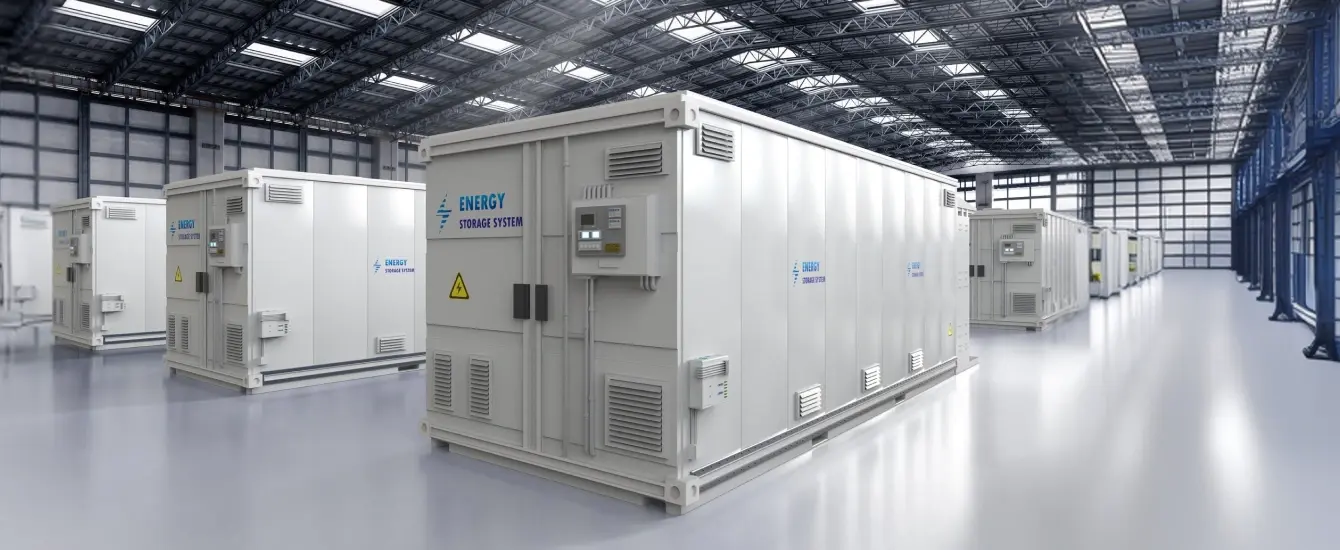
Why Is Battery Storage Becoming Viable Now?
For years, battery storage was viewed as a promising technology with limited commercial viability. While the operational benefits were clear, the economics were often challenging.
That equation is changing.
Advances in battery technology, manufacturing scale, and growing global demand have contributed to a significant decline in storage costs over the past decade.
Energy think-tank Ember estimates that battery storage costs have fallen by 20% a year over the last decade, while installations have increased at an average annual rate of 80%.
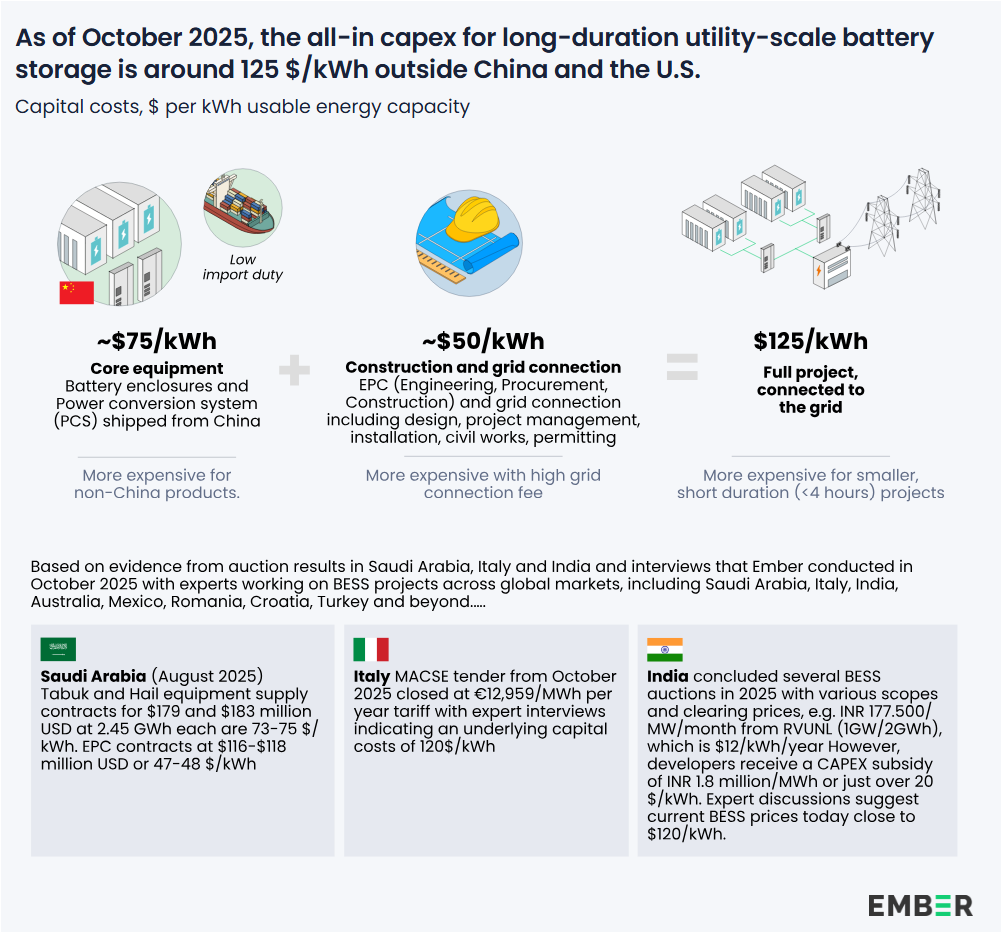
As costs continue to fall, businesses are increasingly evaluating battery systems not only as a sustainability initiative, but as a practical tool for managing electricity demand and improving energy resilience.
This shift is already reshaping electricity markets globally. Energy storage is enabling greater renewable energy integration, supporting grid flexibility, and helping businesses optimize how they consume power. As solar generation expands, storage is becoming increasingly important in bridging the gap between when electricity is generated and when it is needed.
For industrial and logistics parks, declining battery costs could make energy storage an increasingly practical component of future infrastructure planning.
What’s Holding Back Adoption in India?
Despite growing interest, battery storage remains at an early stage within India’s industrial and logistics sector.
The biggest challenge is economics. While costs have declined significantly, large-scale battery systems still require substantial upfront investment. Beyond the batteries themselves, projects require power management systems, thermal controls, fire safety infrastructure, and ongoing maintenance.
There is also a maturity challenge. Many occupiers are still evaluating return-on-investment timelines, while large-scale deployment examples within warehousing remain limited.
India’s policy environment is beginning to shift in favour of energy storage. According to the India Energy Storage Alliance (IESA), India could require at least 160 GWh of energy storage capacity by 2030 to support renewable energy integration and grid stability. Government initiatives, including viability gap funding support for Battery Energy Storage Systems, are also helping accelerate market development.
As battery prices continue to decline and renewable energy adoption expands, the business case for storage is expected to strengthen further.
The Technologies Powering the Transition
Lithium-ion batteries currently dominate the global energy storage market due to their efficiency, scalability, and commercial maturity.
Other technologies are also gaining attention. Sodium-ion batteries are being explored as a lower-cost alternative with reduced dependence on critical minerals, while flow batteries are attracting interest for applications requiring longer-duration storage.
For most industrial and logistics applications today, lithium-ion remains the most commercially viable option due to its established supply chain, performance track record, and scalability.
As battery technologies continue to mature and costs decline, leading industrial developers are beginning to explore how storage can be integrated into large-scale logistics infrastructure.
Why Industrial Parks Have a Unique Advantage
Some of the strongest examples of energy integration are emerging from the industrial and logistics real estate sector. Unlike standalone facilities, industrial and logistics parks can create opportunities for infrastructure planning at scale. Institutional developers influence rooftop design, utility planning, electrical capacity, renewable integration, and long-term infrastructure investment decisions.
A leading global logistics real estate platform has already surpassed 1 GW of combined solar and battery storage capacity across its portfolio, demonstrating how industrial facilities can support renewable energy generation, energy storage, and occupier resilience at scale.
The significance of this trend extends beyond sustainability. It highlights how industrial real estate is evolving from a passive consumer of electricity to a more active participant in energy generation, storage, and management.
India is still at an early stage of this transition. However, as renewable energy adoption accelerates and energy storage becomes more cost-effective, similar opportunities could emerge across industrial and logistics parks. While large-scale shared energy models are still evolving, industrial parks are uniquely positioned to support this transition. Facilities designed with future energy requirements in mind will be far better positioned to adopt emerging energy technologies than those that require extensive retrofitting later.
Building the Foundations for an Energy-Ready Future
Warehouses that are designed only for today’s requirements may find it more difficult to adapt to tomorrow’s energy needs.
Addressing these future requirements will require long-term infrastructure planning, investment, and a willingness to build beyond immediate operational needs. This is where institutional developers can play an important role.
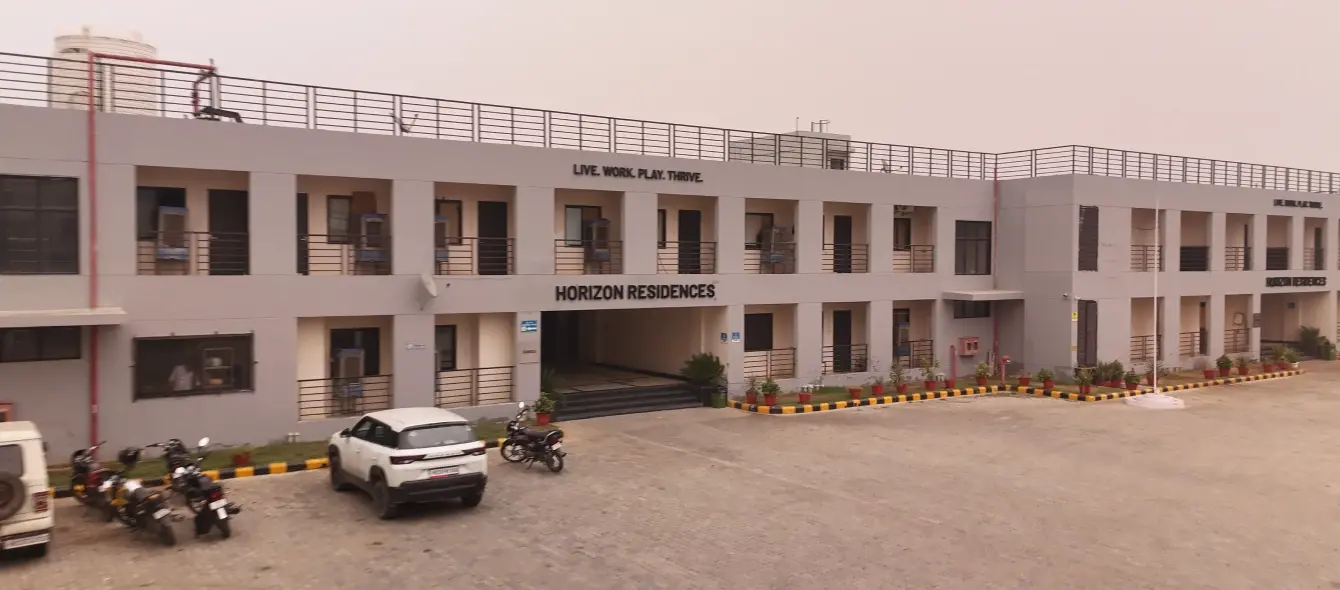
At Horizon Industrial Parks, sustainability initiatives are closely aligned with occupier needs and long-term infrastructure planning.
Across its portfolio, in just 4 years, Horizon has installed 23.45 MWp of rooftop solar capacity contributing to an annual emissions reduction of 29,681.73 tCO₂e across the portfolio. We’ve implemented 100% LED-enabled park operations, established 100% water recycling systems, and developed more than 430 rainwater recharge pits. These initiatives help create more resource-efficient industrial environments while supporting occupiers in achieving their operational and sustainability objectives.
The benefits are already visible across customer deployments. Horizon’s built-to-suit facility for IG International was designed with rooftop solar provisions, enhanced power infrastructure, and energy-efficient systems to support large-scale cold-chain operations. Similarly, its facility for LF Logistics integrated rooftop solar and customized infrastructure to support operational efficiency and future growth.
These examples reflect a broader shift in industrial real estate. As occupiers place greater emphasis on efficiency, resilience, and sustainability, infrastructure is increasingly being designed with future energy requirements in mind. Renewable energy integration, intelligent utility planning, and scalable power infrastructure are no longer optional considerations—they are becoming foundational elements of modern industrial and logistics parks.
As energy storage adoption evolves, the industrial developments best positioned to benefit will be those that have already invested in building these foundations.
From Warehousing to Energy Infrastructure
Battery energy storage is still at an early stage within India’s warehousing sector, but many of the conditions that support adoption are rapidly falling into place. Renewable energy deployment is accelerating, storage technologies are becoming more cost-competitive, industrial operations are growing increasingly energy-intensive, and the demand for reliable, flexible power infrastructure continues to rise.
For decades, warehousing innovation has been driven by location, connectivity, and operational efficiency. The next phase of evolution may be shaped by energy.
As renewable power, automation, artificial intelligence, and electrified transportation become more deeply integrated into industrial operations, energy storage has the potential to become an important layer of infrastructure that enhances resilience, efficiency, and sustainability.
The role of industrial and logistics parks is therefore expanding beyond the movement and storage of goods.
In the years ahead, these facilities may play an increasingly important role in how energy is generated, managed, and optimized across industrial ecosystems. The conversation is no longer centered on whether energy storage has a role to play, but rather on how quickly the ecosystem can adapt to unlock its full potential.
Industrial parks that begin building the foundations for this transition today will be better positioned to support the operational, sustainability, and energy requirements of tomorrow.