


Industrial competitiveness in India has traditionally been shaped by land availability, connectivity, power reliability, and access to labor. Water is now entering that equation.
Global freshwater demand has been rising by just under 1% annually since the 1980s, while demand is widely expected to exceed sustainable supply by nearly 40% by 2030 if current patterns continue. In India, annual per-capita water availability stood at 1,486 cubic meters in 2021 and is projected to decline to 1,367 cubic meters by 2031, placing the country firmly within the water-stressed range.
For industrial businesses, this is no longer primarily an environmental concern. It is an operating-risk issue. Water availability can influence manufacturing continuity, regulatory approvals, expansion decisions, investor confidence, and the long-term viability of an industrial location.
Industrial water is entering a new era
Industry accounts for just under 20% of global freshwater withdrawals. As industrial output expands, businesses are facing a more complex combination of groundwater depletion, climate variability, urban demand, and tighter regulation.
The implications are particularly significant for India, where water-dependent sectors contribute roughly half of national value added and employ nearly 70% of the workforce. At the same time, the country generates more than 72,000 million liters of sewage per day, while only about 20,000 million liters are actually treated.
This gap represents both a risk and an infrastructure opportunity.
Water policy is also evolving. The National Water Mission continues to promote a 20% improvement in water-use efficiency, while the Bureau of Water Use Efficiency is strengthening sectoral benchmarking and state-level implementation. Maharashtra has moved towards prioritizing treated wastewater for thermal power and industrial users, while Tamil Nadu has developed large tertiary treated reverse-osmosis systems to supply industrial corridors around Chennai.
The regulatory direction is clear. Industrial water management is moving beyond discharge compliance towards measurable efficiency, safe reuse and reduced dependence on freshwater.
From utility provision to competitive differentiation
For next-generation industrial parks, water stewardship will increasingly perform the same strategic role that power reliability and transport connectivity perform today.
An industrial park that can offer diversified water sources, recycled water infrastructure, rainwater harvesting, dual plumbing, digital metering and monitored treatment quality is not simply more sustainable. It is potentially more reliable, easier to operate within, more efficient, and less exposed to future restrictions.
The World Bank argues that the business case for reuse is strongest when wastewater is available close to the point of demand, a condition frequently found in urban centers and industrial parks. This geographic concentration allows treatment and distribution infrastructure to serve multiple occupiers, improving scale economics, and reducing the cost burden on individual facilities.
Global water reuse capacity has already tripled over the past two decades and is expanding at almost 7% annually. The World Bank estimates that potable and industrial reuse could grow eightfold by 2040 to reach 430 million cubic meters per day, potentially unlocking as much as US$340 billion in investment.
Industrial parks are structurally well positioned to capture this opportunity because they can operate as shared utility platforms rather than collections of isolated buildings.
Evidence from global and Indian markets
Several projects demonstrate how water infrastructure can strengthen industrial competitiveness.
The Chennai Metropolitan Water Supply and Sewerage Board (CMWSSB) has demonstrated how public water infrastructure can support industrial growth at scale. To reduce dependence on freshwater, CMWSSB developed two 45 MLD tertiary treated reverse osmosis (TTRO) plants at Kodungaiyur and Koyambedu, supplying high-quality treated water to industrial corridors including Oragadam, Sriperumbudur, Manali and Ennore. The initiative created a reliable alternative water source for industries in one of India’s most water-stressed manufacturing regions, while enabling greater reuse of municipal wastewater and supporting long-term industrial expansion without increasing pressure on freshwater resources. Nagpur’s treated-water partnership with MAHAGENCO provides another model. Municipal wastewater is treated and supplied for power-plant cooling, reducing freshwater dependence while creating a recurring revenue stream for the city. Reported treatment and delivery costs were approximately INR 3.4 per cubic meter, demonstrating how a major industrial offtake can help support viable reuse infrastructure.
Globally, Lingyuan in China supplies reclaimed water to industries at roughly 65% of the local industrial tap-water tariff, with revenues covering the full operating cost of tertiary treatment. Durban’s industrial water recycling project similarly uses treated wastewater to serve industrial customers while recovering almost all operating costs through water sales.
Private-sector cases reinforce the same commercial logic. Hindustan Unilever’s Chhindwara facility reduced specific water consumption by approximately 50% from its 2020 baseline, while an on-site pond meets around 75% of annual water requirements. Its Hosur facility has reduced specific consumption by 42% since 2020 and reuses 100% of treated effluent through a zero-liquid-discharge system.
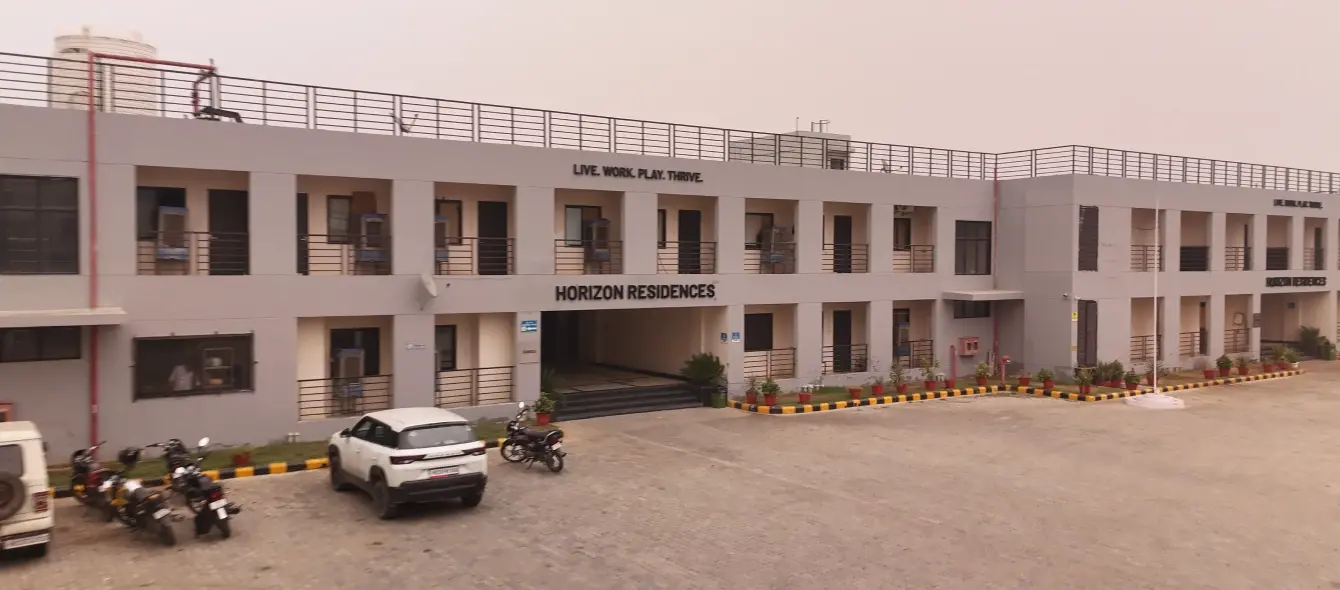
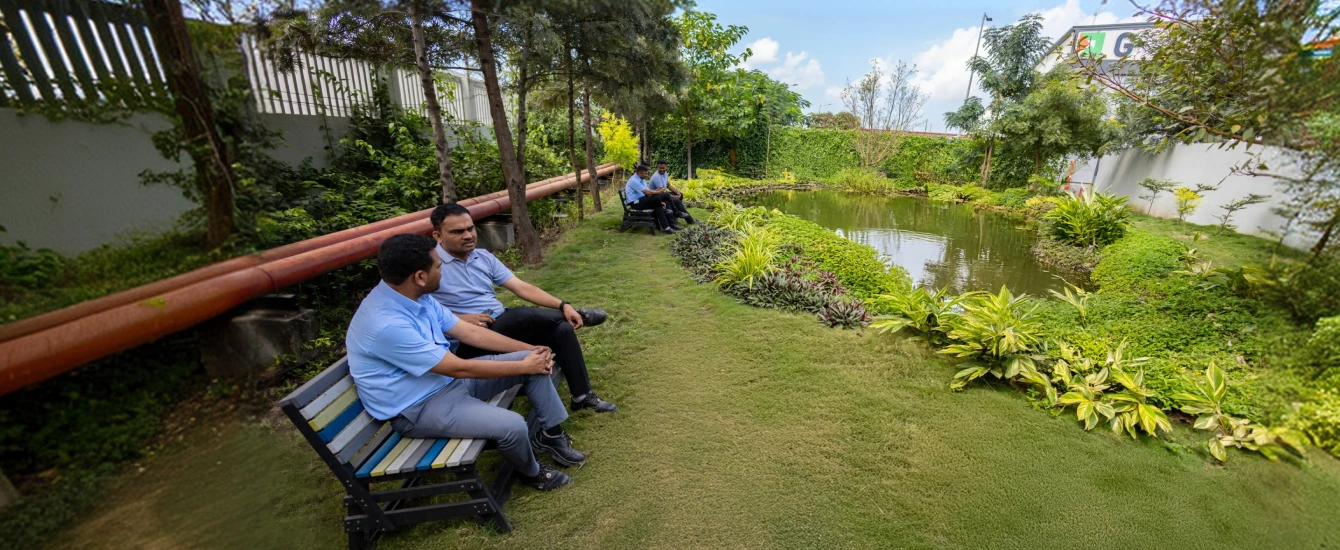
Horizon Industrial Parks has also embedded water stewardship across its industrial and logistics parks through on-site grey water treatment and rainwater harvesting, supported by a cumulative pond area of 23,831 sq. m. Low-flow fixtures and treated water for flushing and landscaping enable each green building-certified park to achieve 35% to 40% water savings compared with conventional logistics parks. Additional water treatment capacity is also provided to meet occupiers’ operational requirements. For example, at its built-to-suit facility for world-leading wire harness manufacturer Yazaki in Chengalpattu, a 150 KLD sewage treatment plant enables complete reuse of treated water for flushing and landscaping, reducing dependence on freshwater sources.
Why this matters to businesses and investors
For manufacturers, reliable water supply can reduce disruption risk and support future capacity expansion. For industrial occupiers, park-level systems can lower the burden of developing standalone treatment infrastructure and simplify sustainability reporting.
For industrial park developers, water-secure industrial infrastructure can improve tenant attraction, regulatory readiness, and asset resilience. Industrial and logistics parks with auditable reuse performance may also be better positioned in conversations with institutional investors, lenders and insurers, particularly as water risk becomes more visible in financial due diligence.
The OECD has identified water-related risks as material to economic and financial stability. This suggests that water performance will increasingly influence infrastructure underwriting, portfolio risk assessment, and long-term valuation.
Operating costs also matter. Although recycled water may sometimes cost more than conventional freshwater, the commercial comparison is changing. Businesses must now consider the full cost of water insecurity, including supply interruptions, tanker dependence, withdrawal restrictions, discharge compliance, and reputational exposure.
The industrial park of 2035
By 2035, leading Grade A industrial parks are likely to manage water as a portfolio-level strategic resource.
They will offer multiple grades of water for different uses, combine municipal treated water with rainwater harvesting and recharge systems, use real-time monitoring to track consumption and quality, and design shared treatment infrastructure around committed tenant demand.
Water performance will form part of site-selection due diligence alongside power, connectivity and labor access. Occupiers will ask not only how much water is available, but where it comes from, how reliably it can be supplied, how much is recycled, and how performance is verified.
The next generation of sustainable industrial parks will therefore be defined not by how effectively they communicate water stewardship, but by how reliably they deliver it.
In an increasingly water-constrained economy, the most competitive industrial parks will be those that treat water not as an unlimited utility or an ESG disclosure, but as essential manufacturing infrastructure.