



Synopsis: For decades, global supply chains were optimised for efficiency – lean inventories, tightly synchronised production, and lowest-cost sourcing. That model delivered scale. It also created fragility. In 2026, disruptions are no longer occasional shocks but a persistent structural feature of global trade – shaped by the ongoing geopolitical conflicts, evolving trading relationships, climate volatility, and accelerating digital dependence. The question is no longer whether disruptions will occur – but how well systems are designed to absorb them. This Supply Chain Disruptions 2026 blog examines the forces driving these disruptions, their cascading impacts, and why physical infrastructure – particularly strategically located industrial parks and distributed warehousing networks – is emerging as the most critical lever of resilience.
What Defines a Supply Chain Disruption in 2026?
A supply chain disruption is any event that interrupts the flow of goods – from raw material sourcing and production to distribution and final delivery. They have shifted from being an exception to the norm as modern supply chains operate in a state of ‘permanent disruption’ or ‘continuous volatility’. These disruptions are interconnected, compounding and structural, making adaptability and resilience essential strategies for modern businesses A port closure in the Persian Gulf does not simply delay one shipment – it triggers insurance withdrawals, reroutes global freight, inflates fuel costs across continents, and forces governments to ration essential commodities. A climate event in one region disrupts agricultural inputs that feed manufacturing processes in another. A cyberattack on logistics software cascades through thousands of shipment nodes within hours.
This interconnectedness has elevated supply chain disruption to a systemic risk – one that demands dedicated supply chain risk management through structural solutions, not just reactive management
What Is Driving Supply Chain Disruptions in 2026?
Supply chain disruptions stem from multiple, often overlapping sources. In 2026, five structural forces are converging to create the most challenging operating environment in decades.
1) Geopolitical Volatility and Trade Route Disruption
The most immediate driver is the US–Iran conflict and the resulting closure of the Strait of Hormuz – a narrow waterway between Iran and Oman through which approximately 20% of the world’s oil and natural gas normally transits (CRS Report). Following the launch of Operation Epic Fury on 28 February 2026, Iran declared the Strait closed to commercial shipping. Tanker traffic dropped by over 70% within days. Insurance markets withdrew coverage, and major shipping lines – Maersk, Hapag-Lloyd, CMA CGM, and MSC – suspended transits entirely. Simultaneously, Houthi-controlled Yemen resumed attacks on commercial vessels in the Red Sea, forcing Suez Canal traffic to reroute around the Cape of Good Hope.
The International Energy Agency has characterised this as the “largest supply disruption in the history of the global oil market”. Brent crude surged past $100 per barrel for the first time in four years, peaking at $126 per barrel (CNBC). As of mid-April 2026, even after a ceasefire was announced, over 20,000 vessels remain stranded and ship traffic is far below pre-war levels. The Russia–Ukraine conflict also continues to compound energy, food, and industrial input pressures in parallel.
The cascading effects of these conflicts extend well beyond energy markets:
-
- Freight costs have spiked across all modes, with container shipping rates reflecting rerouted voyages adding weeks to transit times.
- Insurance premiums for Gulf-bound cargo have reached multi-year highs (Kpler Analysis).
- Fertiliser supply chains – with 30–35% of global urea exports and 20–30% of ammonia exports transiting the Strait – are severely disrupted.
- The textile industry – particularly the manmade fibre (MMF) segment – faces sharp cost pressure as crude-linked polymer and polyester feedstock prices surge, with manufacturers reporting margin erosion across yarn, fabric, and garment production.
- The construction sector is contending with rising input prices for primary metals, synthetic rubber, and petrochemical derivatives leading to increased overall construction costs.
- Sectors that have a high dependence on imported raw materials, thin operating margins, and limited hedging capacity among smaller operators are particularly vulnerable.
2) Climate and Environmental Events
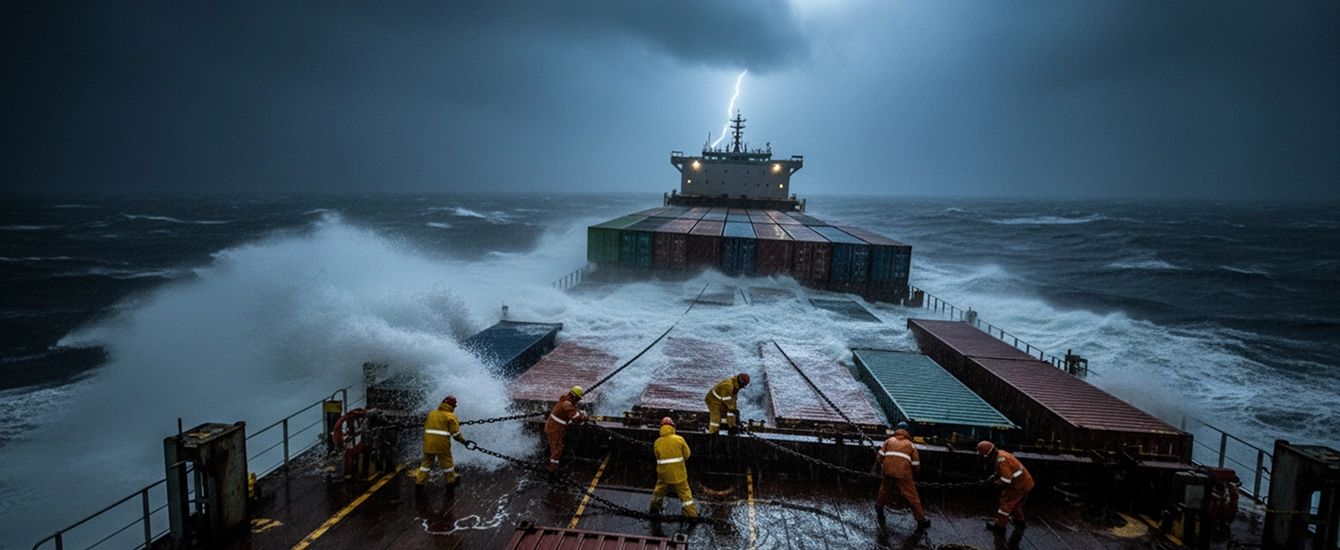
While geopolitical events dominate the 2026 headlines, climate-related disruptions continue to compound supply chain stress with increasing frequency. Extreme weather events – floods, heatwaves, cyclones, and monsoon variability – are recurring, predictable risks that must be factored into supply chain design:
-
- Flooding disrupts transport corridors, rail networks, and last-mile delivery routes – particularly in India’s monsoon-dependent regions.
- Heatwaves affect labour productivity within warehouses and factories, increase equipment failure rates, and degrade temperature-sensitive inventory.
- Cyclonic activity along India’s eastern and western coasts threatens port operations and coastal logistics infrastructure.
- Agricultural supply variability affects raw material availability for food processing, pharmaceuticals, and agri-input manufacturing.
Climate risk is now a supply chain design parameter – not an externality to be managed after the fact.
3) Increasing Supply Chain Complexity
Modern supply chains are global fragmented, and more time-sensitive than ever before. E-commerce fulfilment, just-in-time manufacturing, and omnichannel distribution have increased the number of nodes, handoffs, and dependencies in the system. Each additional node is a potential failure point. Each dependency amplifies the speed at which a localised disruption propagates through the network.
4) Digital Dependence and Cyber Risk
As supply chains digitise, they become exposed to an entirely new category of risk. Cyberattacks, system failures, and data disruptions can halt operations as effectively as a physical blockade. Warehouse Management Systems, transportation management platforms, and IoT-enabled tracking networks are now essential to operations – and their failure can cascade across entire logistics networks within hours.
5) Financial and Organisational Instability
Supplier bankruptcies, mergers, leadership changes, and raw material shortages add another layer of disruption risk. When a critical supplier fails or a key input becomes scarce, the impact ripples through interconnected supply networks – particularly for MSMEs with limited hedging capacity and constrained working capital.
The lesson across all five drivers is clear: the same efficiency, integration, and global reach that make modern supply chains powerful also make them brittle, unless resilience is deliberately designed into the system.
How to Understand Disruption Severity?
Not all disruptions are equal – but in 2026, the frequency of high-severity events has increased dramatically.
- Low-severity disruptions are short-term and localised – minor transit delays, temporary inventory shortages, or single-point equipment failures. These are absorbed operationally without lasting impact.
- Medium-severity disruptions affect operations over weeks or months – supplier failures, prolonged equipment breakdowns, or regional logistics bottlenecks. These require contingency planning and can strain supplier and customer relationships.
- High-severity disruptions reshape entire supply chains. The 2026 Strait of Hormuz crisis, the ongoing Russia–Ukraine conflict, and the COVID-19 pandemic before them are examples of systemic shocks that force fundamental reconfiguration of sourcing, routing, and inventory strategies.
What has changed is not just the frequency of high-severity events, but the speed at which they escalate. In a hyper-connected global supply chain, a disruption at one chokepoint can propagate across continents within days.
What Is The Business Impact Of Disruptions?
The consequences of sustained disruption extend far beyond logistics timelines. They reshape how businesses plan, invest, and compete:
- Cost structures become unpredictable: Freight rates, raw material costs, energy inputs, and inventory holding costs fluctuate sharply. Indian manufacturers are reporting input cost inflation across metals, petrochemicals, and packaging materials, with the S&P Global input price index reaching a 15-month high of 54.7 in February 2026 (DiscoveryAlert)
- Service levels are compromised: Delivery delays erode customer trust, particularly in speed-driven sectors such as e-commerce, retail, and quick commerce. Contract penalties and lost business compound the impact.
- Inventory strategies are rewritten: Companies are moving from lean, just-in-time models to buffer-based approaches – increasing warehousing demand and working capital requirements.
- Supply chain confidence declines: Frequent disruptions reduce reliability across the network, affecting long-term contracts, supplier partnerships, and investment decisions.
In this environment, supply chain resilience is no longer a defensive capability. Supply chain risk management is a competitive differentiator that directly affects a company’s ability to serve customers, manage costs, and sustain growth. Nowhere is this more evident than in India, where rapid growth ambitions are colliding with structural exposure.
How Does The Indian Context See Growth Meeting Acute Vulnerability?
India sits at a unique and exposed intersection. The country imports over 85% of its crude oil – approximately 5.5 million barrels per day – making it the world’s third-largest oil importer (CNBC). In the wake of the ongoing crisis, India’s dependence on the Persian Gulf becomes prominent:
- LPG: Over 91% of India’s LPG imports come from Saudi Arabia and the UAE. Domestic LPG prices were raised by ₹60 per cylinder within days of the Strait closure (VisionIAS)
- LNG: Qatar supplies approximately 50% of India’s LNG. With shipments halted, fertiliser plants and power grids are operating at reduced capacity under a government-mandated four-tier rationing system (Anandrathi PMS)
- Crude Oil: India has lost access to approximately 3 million barrels per day that previously transited the Strait, forcing refiners to scramble for Russian and other alternative supplies (CNBC)
- Strategic Reserves: India holds roughly 160 million barrels – providing only about 30 days of buffer, compared to China’s approximately 300 days (CNBC)
- Input Costs: Brass prices surged 24.1%, copper wire 20.7%, and aluminium powder 17.5% month-over-month in February 2026, reflecting acute sensitivity to geopolitical disruption (DiscoveryAlert)
The government has responded by invoking the Essential Commodities Act, directing refineries to maximise LPG recovery, and securing a temporary US waiver to purchase stranded Russian oil cargoes (CNBC). India’s finance ministry has also warned that its growth forecast of 7.0–7.4% faces “considerable downside risk” from elevated energy costs and supply chain disruptions.
But, it is worth noting, India’s response, extends well beyond crisis management in the current escalation. The country is building a long-term structural foundation for supply chain self-sufficiency and resilience through a convergence of policy, infrastructure, and industrial strategy. The PM Gati Shakti National Master Plan is coordinating multimodal infrastructure planning to eliminate the fragmented, siloed approach that historically constrained logistics efficiency. The National Logistics Policy, launched alongside Gati Shakti, targets systemic cost reduction through streamlined processes, digital platforms such as the Unified Logistics Interface Platform (ULIP), and human capital development across the logistics sector.
On the manufacturing side, Production-Linked Incentive (PLI) schemes across 14 sectors are actively reducing import dependence by scaling domestic capacity in electronics, pharmaceuticals, chemicals, textiles, and defence. Seven PM MITRA parks are under implementation to create integrated textile manufacturing hubs with shared utilities and logistics connectivity.
The Dedicated Freight Corridors are materially reducing transit times and enabling single-stock-pool inventory models that cut safety stock requirements. India’s public capital expenditure has grown building the physical backbone – industrial corridors, logistics parks, port modernisation, multimodal terminals – that transforms supply chain resilience from a reactive aspiration into embedded infrastructure.
This dual reality – acute short-term exposure meeting accelerating long-term capability – makes supply chain resilience not optional but foundational for India’s economic trajectory.
How To Change Approach From Risk Management to Structural Resilience?
Traditional approaches to disruption, focused on managing risk after it occurs – activating contingency plans, finding alternative suppliers, expediting shipments. These remain necessary, but they are no longer sufficient.
The shift in supply chain risk management in 2026 is toward building resilience into the physical and operational architecture of the supply chain itself:
- Diversified sourcing strategies that reduce dependence on single regions or suppliers
- Regionalised supply chains that shorten distances and reduce exposure to global chokepoints
- Buffer inventory planning supported by distributed storage networks
- Flexible logistics networks that can dynamically reroute and scale
- Real-time digital visibility through integrated tracking, predictive analytics, and AI-driven route optimisation
But among these levers, one is consistently underestimated – and it is the one most directly within the control of businesses operating in India.
Warehousing As A Core Logistics Infrastructure Resilience Lever
In a disruption-prone environment, warehousing is becoming central to how supply chains absorb shocks, buffer demand variability, and maintain continuity.
Strategically located warehouses enable:
- Faster response to sudden demand fluctuations by positioning inventory closer to consumption clusters
- Reduced dependency on long-haul transport routes that are vulnerable to geopolitical and climate disruptions
- Buffering against supply shocks by holding safety stock across multiple nodes rather than in centralised facilities
- Greater flexibility in inventory positioning, allowing dynamic allocation based on real-time demand signals
Distributed warehousing networks – as opposed to centralised, single-location models – reduce the impact of any single disruption by decentralising risk across multiple geographies. In effect, warehouses are becoming the shock absorbers within supply chains.
Industrial And Logistics Parks Enable Resilience at Scale
If warehousing is the lever, industrial and logistics park ecosystems are the platform that enables it at scale.
Modern, well-planned Grade A industrial parks provide the infrastructure backbone that transforms individual warehouses from isolated facilities into network nodes that stabilise supply chains:
- Multi-location distribution networks that enable companies to serve diverse markets from multiple proximity points, reducing single-point-of-failure risk
- Proximity to consumption and manufacturing clusters, shortening last-mile distances and reducing exposure to long-distance transit disruptions
- Integrated infrastructure and connectivity – road, rail, and port access – that provides routing flexibility when primary corridors are disrupted
- Scalability during demand surges, with ready-to-move and built-to-suit options that allow rapid capacity expansion without greenfield lead times
- Sustainability and ESG alignment, with IGBC-certified facilities, renewable energy, water recycling, and climate-resilient design that future-proof operations against environmental disruption
India’s largest industrial and logistics park platforms are already operating on this model. Horizon Industrial Parks, for instance, has built a national footprint of 45 parks across 10 major regions – enabling occupiers to distribute operations across key consumption and manufacturing corridors rather than concentrating risk in single locations. With institutional-grade infrastructure, 24×7 safety systems, and integrated sustainability practices, such platforms demonstrate how industrial real estate is not just enabling logistics but enabling continuity.
What Is The Role Of Technology In Disruption Response?
Physical infrastructure provides the foundation, but technology provides the intelligence that makes resilient supply chains responsive in real time.
Advanced digital systems now enable:
- Real-time shipment tracking and inventory visibility across distributed warehouse networks
- Predictive risk identification that flags potential disruptions before they fully materialise
- Dynamic route optimisation that reroutes shipments around emerging bottlenecks
- Demand sensing and automated replenishment that adjusts inventory positioning based on live market signals
However, technology is only as effective as the physical infrastructure it operates within. The most sophisticated AI-driven routing algorithm cannot compensate for a lack of strategically located warehousing capacity. Digital capability and physical infrastructure must evolve together – and in 2026, the companies and platforms that integrate both are best positioned to navigate disruption.
What Is The Role Of Technology In Disruption Response?
Supply chains are being redesigned not for maximum efficiency alone, but for balanced performance – where resilience, flexibility, and efficiency coexist. The companies and economies that invest in distributed infrastructure, strategic warehousing networks, integrated logistics platforms, and data-driven visibility will be better positioned to navigate uncertainty and sustain growth.
As India scales its manufacturing ambitions, expands its consumption base, and deepens its integration into global trade, the infrastructure that supports its supply chains will determine not just how fast goods move, but how reliably they continue to move under stress.
That resilience will not be managed in a crisis room. It will be built – in the parks, warehouses, and logistics networks that form the physical backbone of India’s supply chain future.