



Synopsis: Next-generation industrial parks are emerging as critical enablers of India’s export growth by combining connectivity, infrastructure, compliance, and scalability. Aligned with national initiatives like PM Gati Shakti and the National Logistics Policy, these integrated ecosystems reduce logistics costs, improve reliability, and help manufacturers – especially MSMEs – compete globally, strengthening India’s position in evolving global supply chains.
How Are Next-Generation Industrial Parks Making India Export-Ready?
India’s exports have never mattered more.
Over the past decade, the share of exports in India’s GDP has risen from around 19.8% in 2015 to over 21% in 2025, even as the global trade environment has grown more volatile and competitive. The way the world thinks about production and trade has also shifted: supply chains are being rebalanced, friend-shoring and near-shoring are now mainstream strategies, and resilience matters as much as cost.
In this context, India’s export story is not just about what we make, but how and where we make it.
That is where industrial parks come in.
From multi-product parks and sector-specific clusters to SEZs and multi-modal logistics parks, India’s new generation of industrial ecosystems are quietly becoming the launchpads for export growth. They are where infrastructure, policy, technology and talent converge; where containers are stuffed, bills of lading generated, and export orders fulfilled with predictability.
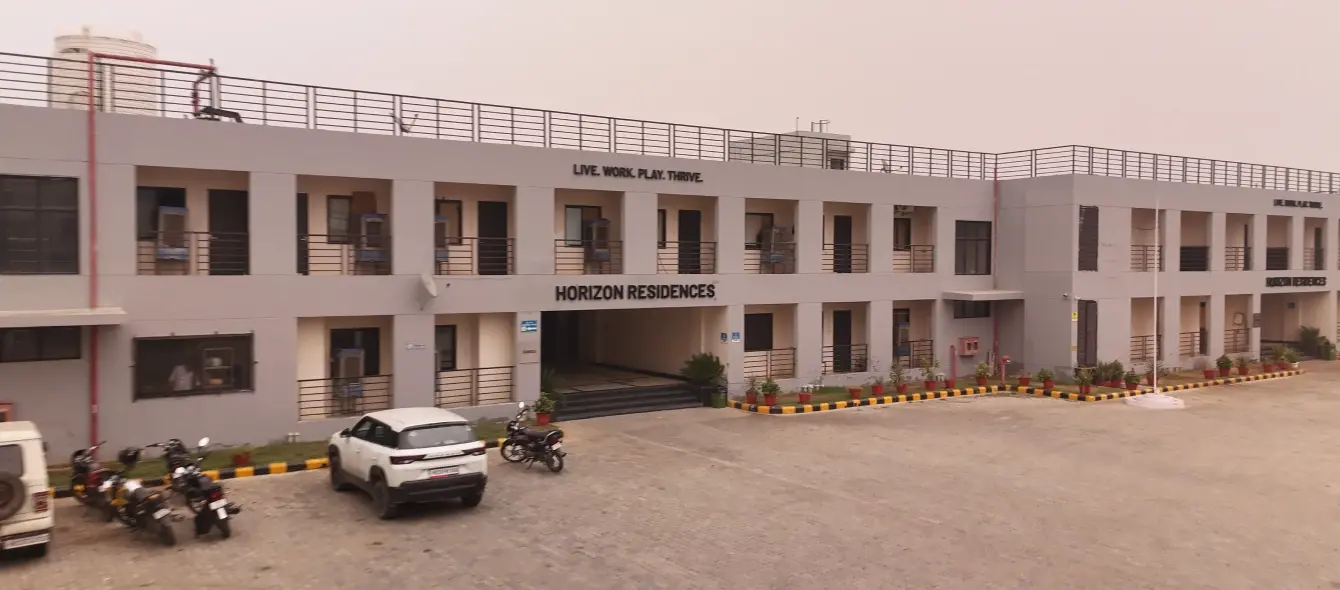
At Horizon Industrial Parks, we sit at the intersection of these trends. Our work across logistics and industrial corridors gives us a ground-level view of how well-designed parks enable exporters in the daily realities of cost, speed, reliability and compliance.
This blog explores the role industrial parks are playing in enabling India’s export economy – and what it will take to turn that role into a long-term competitive advantage.
Why Is Infrastructure Critical to India’s Export Competitiveness?
India’s export performance has remained resilient despite global headwinds. Merchandise exports have diversified across sectors and geographies, and several states – including Gujarat, Maharashtra, Tamil Nadu and Andhra Pradesh – have emerged as powerful export engines with distinct specialisations.
Beneath those numbers lies a simple truth: logistics and infrastructure can either unlock or undermine competitiveness.
The National Logistics Policy (NLP) and PM Gati Shakti National Master Plan were created to build multi-modal connectivity, rationalise infrastructure investments, and use data to plan logistics at a systems level.
Industrial parks are the physical manifestation of this systemic effort. They are where highways meet railheads, where utilities are future-proofed, and where exporters can plug into global demand without having to build foundational infrastructure on their own.
How Do Industrial Parks Enable Export Scale and Manufacturing Specialisation?
One of the major advantages industrial parks bring to the export equation is scale. By aggregating manufacturers, warehouses and logistics operators within a planned ecosystem, parks create economies that individual firms – especially MSMEs – cannot achieve alone.
Special Economic Zones (SEZs) remain the most visible expression of this idea. They consistently contribute over one-third of India’s exports, with SEZ exports reaching US$163.7 billion in FY24. Studies highlight how SEZs attract foreign investment, create employment and catalyse infrastructure improvements.
But the story is now broader than SEZs.
A new generation of private industrial and logistics parks – the kind developed by institutional players like Horizon Industrial Parks – offer many of the same advantages – plug-and-play infrastructure, standardised design, shared utilities and professional asset management – without being limited to specific fiscal regimes. These parks are increasingly built with export logistics in mind: proximity to ports and airports, customs facilitation, in-park container handling, and collaboration with freight forwarders and 3PLs. Horizon’s parks are planned along key freight corridors and near major consumption and production centres. They offer a dual advantage: proximity to engineering talent and R&D on one end, and direct access to export gateways on the other.
This translates into three export advantages: lower logistics cost through consolidation and shared warehousing, greater reliability due to professionally managed park infrastructure, and upgraded capabilities – from cold chain to ESG-ready utilities – that exporters can leverage without bearing full capex.
Locating in a well-designed park is no longer just a real estate choice; it is a strategic one.
How Does Multimodal Connectivity Improve Export Efficiency from Industrial Parks?
Regardless of how efficient a factory is, exports move on roads, rails, waterways and shipping lines – entirely independent of internal factory metrics or planning software.
This is why the connectivity logic of industrial parks sits at the heart of India’s export competitiveness.
Under PM Gati Shakti, the government is using a GIS-based National Master Plan to align roads, rail lines, ports, airports, pipelines and power networks. A visible outcome of this approach is the Multi-Modal Logistics Park (MMLP) programme, which has approved 35 locations to improve logistics efficiency and reduce cost.
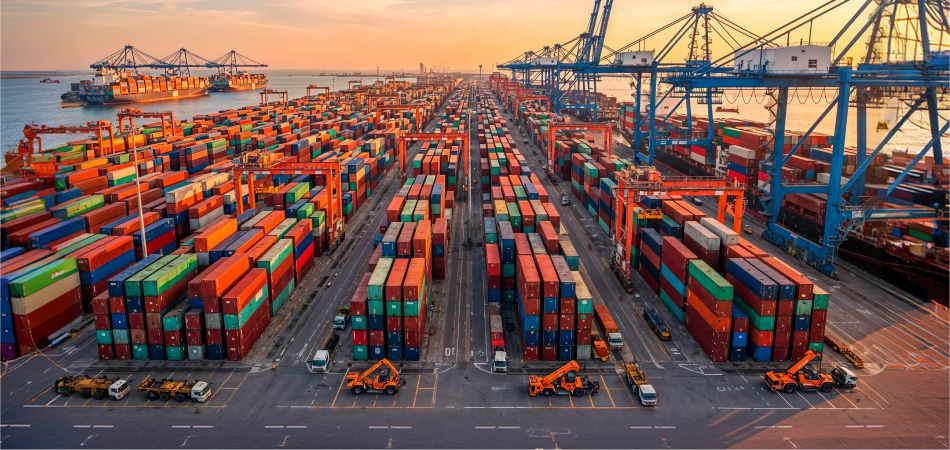
MMLPs act as integrated hubs where exporters can access multiple transport modes, consolidate cargo, and tap into shared infrastructure such as rail sidings, ICDs, truck terminals and value-added services like labelling, packaging, and consolidation.
For exporters, this means shorter lead times, fewer cargo touches, better predictability and the ability to respond faster to global market shifts.
Connectivity becomes not just an enabler, but a strategic differentiator.
How Do Grade-A Industrial Parks Improve Export Quality, Compliance and Global Trust?
Global buyers don’t just purchase products – they buy trust.
For Indian exporters, that trust increasingly depends on quality systems, environmental performance, worker welfare and regulatory compliance across the value chain. Modern Grade-A industrial parks are uniquely positioned to embed these attributes through:
- international-standard building specifications,
- robust and resilient utility systems,
- human-centric workspaces
- and ESG-ready infrastructure such as IGBC-aligned designs, rooftop solar potential, daylighting, and energy-efficient envelopes.
Modern industrial parks like Horizon are designed to be automation-ready, energy-efficient and resilient. High floor load-bearing capacity, climate-optimised shopfloors, enhanced STPs and solar-ready roofs support precision manufacturing and lower lifecycle operating costs.
For export-focused manufacturers – whether in electronics, automotive components, engineering or FMCG – such features ease global audits, strengthen compliance, and signal long-term reliability. When overseas buyers visit, they assess not only the plant but the ecosystem around it. A well-run park conveys commitment to global standards.
How Are Industrial Parks Driving Regional Export Clusters Across India?
India’s export story is becoming increasingly regional.
States like Gujarat and Maharashtra continue to lead merchandise exports, while Tamil Nadu and Andhra Pradesh are strengthening their positions through sectoral specialisation. Tier-2 cities like Indore are emerging as digital export hubs, supported by SEZs with double-digit growth in IT and AI-led services.
Industrial parks sit at the centre of many of these clusters. In the west, they anchor petrochemicals, engineering and auto-component exports. In the south, they enable electronics, renewables, automotive, and precision manufacturing. In the north and east, they support textiles, food processing and agro-exports.
In each case, the park becomes an industrial common – a shared space where suppliers, OEMs, logistics providers and service firms co-locate, creating the density and diversity export ecosystems need.
From Horizon’s perspective, this clustering effect is strongest when parks are developed as platforms, not standalone projects: long-term master plans, scalable phases, build-to-suit and ready-to-move formats, and sustainability and community infrastructure designed to attract talent, not just trucks.
When these elements align, parks become magnets for export-driven growth.
What Makes Industrial Parks Export-Ready Ecosystems for Global Manufacturing from the Horizon Lens?
At Horizon Industrial Parks, the role of industrial parks in India’s export economy is not conceptual – it is lived every day.
Across our parks, four principles consistently drive export success:
Design for flexibility.
Exporters operate in dynamic markets. Modular, automation-ready spaces – mezzanines, integrated office-production layouts and scalable utilities – give manufacturers the ability to adapt without disruption.
Treat sustainability as core infrastructure.
Solar-ready roofs, high-performance envelopes, water-recycling systems, EV charging and biodiversity initiatives are integrated from the outset because they directly shape cost, compliance and brand credibility.
Build for speed and certainty.
Exporters cannot wait years for infrastructure. Fast-track delivery and predictable execution allow manufacturers to align expansion with demand cycles.
Integrate with national connectivity plans.
Parks must align with freight corridors, ports, airports and multi-modal nodes – not operate in isolation. As Gati Shakti and MMLPs mature, this alignment will determine which parks become true export gateways.
This is how we design, build and operate Horizon parks: as export-ready ecosystems that give Indian businesses the confidence to compete globally.
How Will Industrial Parks Shape India’s Export Growth and Global Competitiveness?
India’s export economy is entering a new phase. The question is no longer whether we can manufacture in India, but whether we can do so competitively, reliably and sustainably at global scale.
Industrial parks will be central to that ambition.
They will shape how easily SMEs join global value chains, how efficiently large manufacturers serve multiple markets, and how credibly India positions itself as a trusted, low-friction production base.
The good news is that the foundation is strong: forward-looking policies, multi-modal infrastructure, emerging clusters and sophisticated industrial ecosystems designed for export readiness.
At Horizon Industrial Parks, we see the next decade being defined by how intelligently we build and operate these ecosystems. Our role is clear: to provide the physical and operational backbone that turns India’s export momentum into enduring advantage.
India is already selling more to the world.
The task now is to do it better, faster and more sustainably – from industrial parks truly built for the world.