



Built-to-Suit Warehouses and Factories Tailored Solutions for Modern Industry
Introduction: The Rise of Customized Industrial Infrastructure
The Indian warehousing and industrial real estate sector is experiencing a fundamental shift from standardized facilities toward highly customized infrastructure solutions designed to meet the precise operational requirements of individual businesses. Built-to-Suit (BTS) warehouses and factories - facilities designed and constructed specifically to address the unique needs of a particular tenant or buyer - represent the vanguard of this transformation, offering unparalleled flexibility, operational efficiency, and strategic alignment with business objectives.
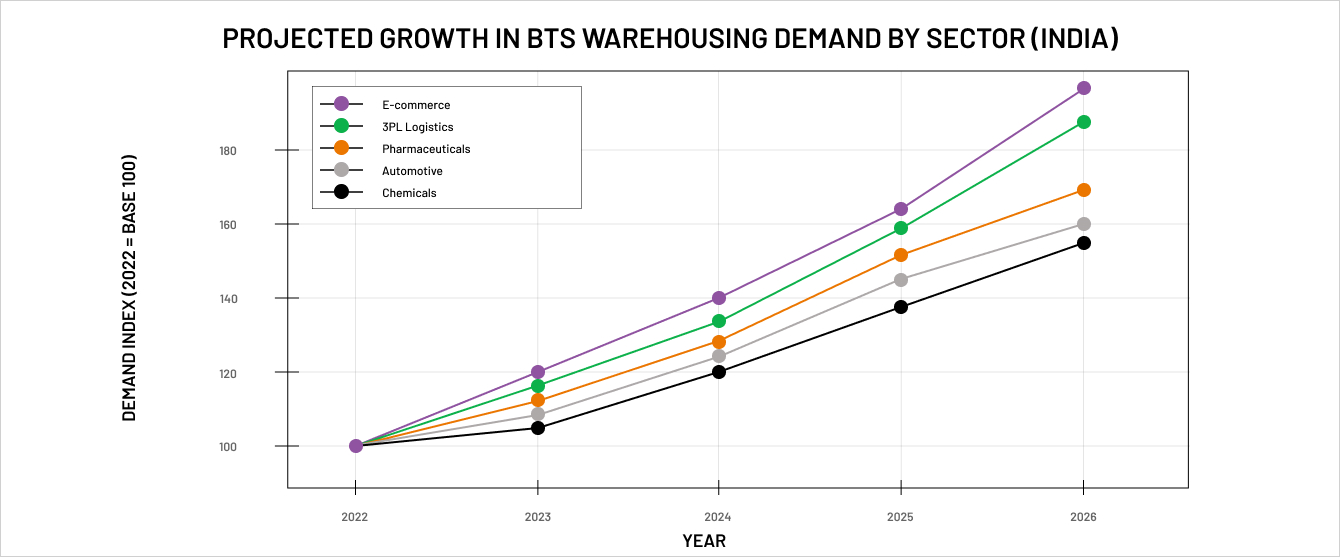
The momentum behind BTS warehousing and industrial facilities is accelerating at a remarkable pace. According to market analysis by Mordor Intelligence, the BTS warehousing market in India is anticipated to grow at a CAGR of 16.4% during the forecast period extending through 2026, reflecting surging demand from diverse sectors including e-commerce, automotive manufacturing, pharmaceuticals, chemicals, and third-party logistics providers. This growth trajectory mirrors broader trends in organized retail expansion, increasing e-commerce penetration, and the imperative for specialized storage solutions.
Unlike traditional warehouses and factories where tenants must adapt their operations to existing infrastructure constraints, BTS facilities invert this paradigm entirely. Developers and occupiers collaborate closely from inception to understand specific infrastructural requirements, operational preferences, and future scalability needs before commencing construction. This partnership ensures that the resulting facility aligns perfectly with tenant specifications, eliminating the necessity for extensive post-acquisition modifications while delivering infrastructure optimized for peak operational performance from day one.
The BTS Development Journey: From Concept to Completion
1. Identifying Operational Requirements
The process begins with comprehensive consultation at the pre-design stage, where warehouse and industrial developers engage in detailed discussions to understand every nuance of the tenant's operations. This discovery phase examines storage and manufacturing specifications with granular detail - including inventory types, volumetric requirements, turnover velocities, complex process requirements, production roadmap and handling characteristics. Equipment needs receive equally thorough scrutiny, from overhead crane specifications and loading capacities to floor load requirements for automated guided vehicles and rack configurations for vertical storage systems. Whether businesses need highly automated e-commerce fulfillment capabilities, heavy-duty flooring for automotive component manufacturing, or specialized climate control for pharmaceutical storage, these requirements are comprehensively documented to inform subsequent design decisions.
2. Evaluating Site Feasibility
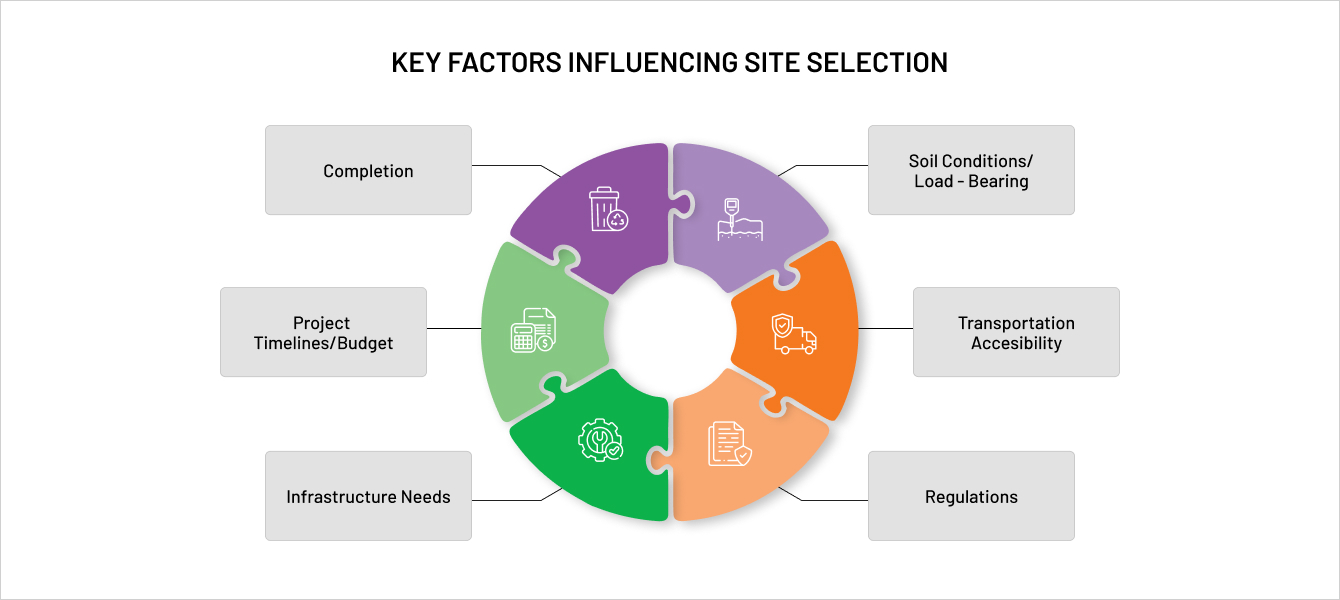
Following requirement identification, rigorous feasibility studies assess whether proposed sites can accommodate the specific construction and operational needs identified. These studies examine soil conditions and load-bearing capacities, transportation network accessibility, municipal regulations and zoning requirements, and environmental impact considerations. Identifying potential issues early allows developers to design realistic project timelines and budgets that account for all constraints, preventing costly surprises during construction.
3. Documentation and Regulatory Compliance
The success of BTS partnerships hinges critically on navigating India's complex regulatory landscape efficiently. Experienced Grade A warehouse and industrial facilities developers like Horizon Industrial Parks possess deep expertise in managing extensive legal due diligence, documentation and compliance requirements for land acquisition and park level operations. The documentation requirements span land acquisition and title verification, environmental clearances from State Pollution Control Boards, building permits from municipal authorities, and occupancy certificates. For specialized industries, additional certifications add complexity and must be procured by tenants - chemical warehouses and factories require Pollution Control Board Red Category certifications, food storage facilities need FSSAI registrations, and pharmaceutical warehouses and factories must meet Good Storage Practices guidelines.

4. Design and Engineering Excellence
During the design phase, architects, engineers, and specialized consultants collaborate intensively with customers to translate operational requirements into concrete infrastructure specifications. This multidisciplinary teamwork ensures every aspect of the facility - from structural load capacities and ceiling heights to dock door configurations, amenities for employees and power distribution systems - is thoughtfully designed with unique operational needs in mind. For cold chain logistics operators, design teams incorporate specialized insulation systems and temperature control and monitoring capabilities. Retail distribution centers receive adaptable layouts accommodating seasonal inventory fluctuations. Automotive component manufacturers get facilities with foundation systems engineered to support overhead cranes and floor specifications rated for heavy equipment movement.
To enable early commencement of operations, experienced developers can also work closely with customers to deliver facilities in phases in line with their production plans, prioritizing essential infrastructure including power supply, water connections, and connectivity infrastructure for early completion.
5. Construction Phase
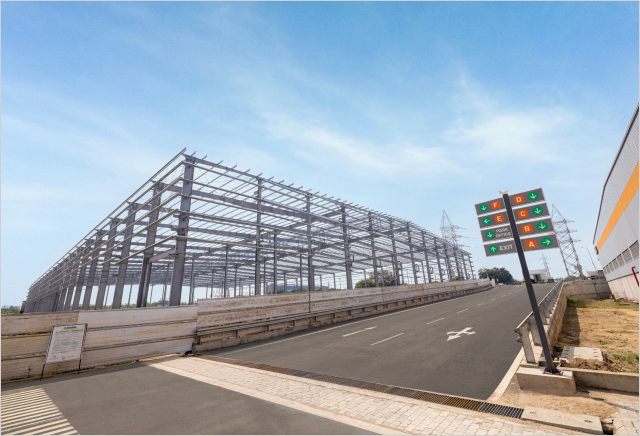
Construction represents the critical phase where design specifications transform into physical infrastructure. Grade A warehouse and industrial developers emphasize sustainable building practices throughout construction - recycled steel for structural components, solar panel installations, LED lighting systems, and rainwater harvesting infrastructure. Throughout construction, leading developers maintain transparent communication with tenants through regular progress updates. A dedicated project manager serves as the single point of contact, ensuring questions receive prompt answers and concerns are addressed proactively. Advanced project management methodologies including Building Information Modeling (BIM) enable detailed visualization and clash detection before physical construction begins, reducing costly rework.
6. Post-Completion Support and Facility Management
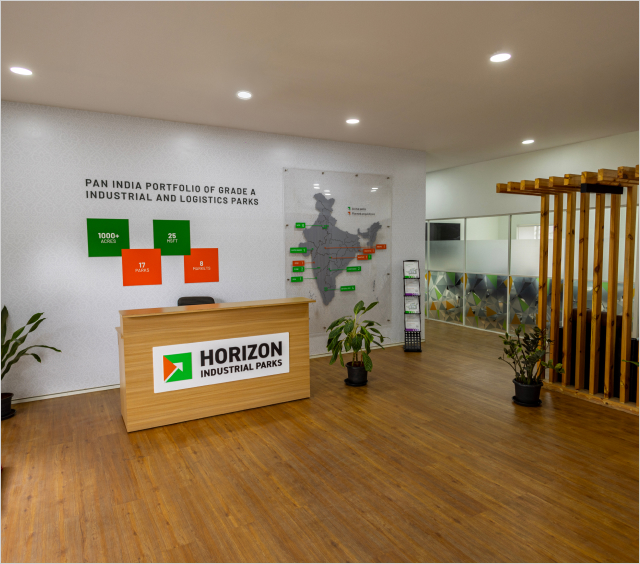
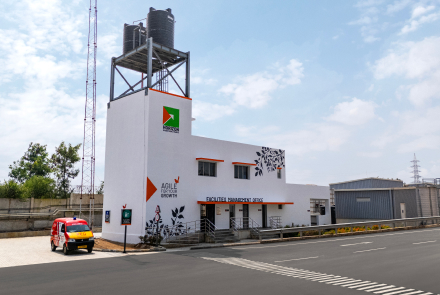
The developer-tenant relationship extends well beyond physical handover. Post-completion support covers transition planning, installation of tenant-required modifications, assistance in securing utilities, onboarding of operating teams, and support in obtaining statutory permissions for commencement of operations. Horizon Industrial Parks deploys specialized facility management (FM) teams dedicated to each park who take responsibility for the full lifecycle performance of the asset. FM services include continuous monitoring of electrical systems, transformers, DG sets, HVAC units, fire-fighting infrastructure, and water supply networks; preventive maintenance scheduling; rapid-response breakdown management; upkeep of internal roads and stormwater drains; STP operation; waste-disposal compliance; landscape and façade management; and centralized security and access-control coordination. This integrated FM approach safeguards asset quality, minimizes downtime, and ensures a safe, compliant, and efficient operating environment for tenants.
Industry-Specific BTS Solutions: Tailored Infrastructure for Diverse Sectors
Chemical Industry: Safety and Compliance by Design
The production, blending, storage, and handling of hazardous materials within the chemical industry necessitate highly specialized warehouses and factories incorporating rigorous safety measures directly into infrastructure design. A BTS warehouse and industrial facility tailored for chemical-industry operations can be designed with well-defined zones in accordance with compatibility protocols, ensuring incompatible substances remain segregated to prevent dangerous reactions. These independent zones function separately for operational and safety purposes, with manufacturing units secured within enclosures separate from storage areas. Specialized fire-fighting systems address chemical-specific risks, incorporating foam suppression systems and automated detection capabilities. Air handling units maintain negative pressure in hazardous areas, while spillage containment systems enable rapid response to accidental releases. The bespoke design ensures adherence to all environmental regulatory compliances, including Pollution Control Board Red Category certifications and Department of Health and Safety requirements. Refer to this case study of BTS warehousing and industrial development for Fosroc to gain insights.
Engineering and Manufacturing: Flexibility for Production Excellence

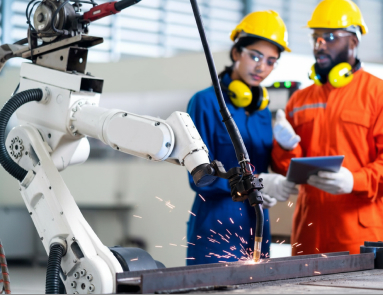

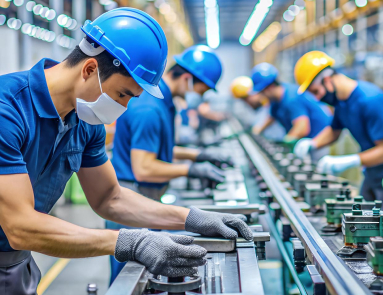
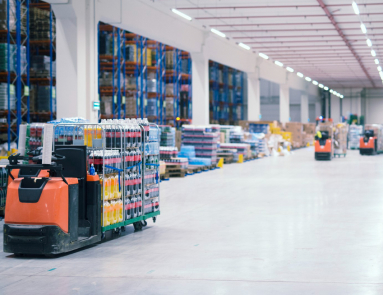
As manufacturing operations scale, the need for tailored shop floors becomes increasingly critical. Manufacturers producing high-volume inventory require layouts enabling streamlined production flows while ensuring easy access to quality control and maintenance functions. Developers provide substantial flexibility in space planning, accommodating phase-wise expansion plans as manufacturers scale operations over time. BTS manufacturing facilities enable sophisticated material handling systems including overhead cranes and advanced automation technologies - Automated Guided Vehicles (AGVs) and Autonomous Mobile Robots (AMRs) - facilitating efficient material flows. According to industry projections, the warehouse and industrial facility robotics market is expected to grow substantially, reaching approximately $9.5 billion by 2026, driven largely by manufacturing sector adoption. Smart manufacturing facilities can be custom-built with sustainability features including solar rooftop panels, thermal insulation, and natural ventilation systems that reduce operational costs while minimizing environmental impacts. An illustration of BTS-enabled manufacturing environments for RENK is detailed in this manufacturing-sector case study.
E-Commerce: Speed and Automation for Fulfillment Excellence
The explosive growth of online shopping has dramatically increased demand for larger, highly automated warehouses and factories capable of handling enormous order volumes with minimal human intervention. Optimal BTS e-commerce facilities enable smart operations by seamlessly integrating large-scale product storage, efficient order processing, and faster last-mile delivery. These warehouses and factories are custom-built with clear heights exceeding 12 meters to facilitate multi-storey racking systems and heavy-duty floors with load-bearing capacities starting at 5 tonnes per square meter enabling deployment of state-of-the-art AGVs and AMRs. Dock door configurations receive careful optimization for e-commerce operations. While standard provision of one dock per 10,000 square feet serves many operations, e-commerce fulfillment centers often require enhanced dock capacity. The rise of quick commerce has generated entirely new warehousing and industrial requirements including dark stores, micro-fulfillment centers, and urban mini-warehouses and factories, with strategically located BTS facilities functioning as central hubs of rapid delivery chains.
Original Equipment Manufacturers: Integrated Production and Logistics
Original Equipment Manufacturers (OEMs) and their supplier networks require customized warehousing and manufacturing facilities accommodating multiline operations spanning production, assembly, storage, and dispatch. Modern OEM facilities demand integrated infrastructure supporting complex operational flows. BTS facilities address these requirements through thoughtful design that optimizes material flows while providing operational flexibility. Foundations, supporting columns, and girders are engineered specifically to facilitate overhead crane installations with load capacities matched to component handling requirements. Safe, integrated mezzanine workspaces provide elevated positions where supervisors monitor operations comprehensively. Climate control systems including HVAC and air handling units regulate temperatures when manufacturing processes demand environmental control. Purpose-built OEM warehouses and factories located within gated industrial parks offer enhanced security protecting valuable components and proprietary processes.
Cold Chain and Temperature-Controlled Storage
Temperature-controlled facilities maintaining environments between 33° and 55° Fahrenheit play critical roles in extending shelf life for perishable products including fresh produce, medicines, vaccines, and cosmetic products. These specialized facilities require substantially different infrastructure, making BTS approaches particularly valuable. Cold storage design optimizes multiple competing objectives: maximizing storage capacity, minimizing refrigeration energy consumption, maintaining precise temperature control, and enabling efficient product movement. High-quality thermal insulation reduces heat infiltration substantially. Insulated rapid-roll doors minimize cold air loss during loading operations. Energy efficiency receives paramount attention given refrigeration typically represents the largest operational cost. BTS designs incorporate environment-friendly materials, renewable energy solutions including solar power, and advanced refrigeration systems using natural refrigerants. According to industry analysis, the cold chain market in India is expanding rapidly, driven by rising consumer demand for fresh produce and pharmaceutical sector growth. Refer to the cold chain case study for additional insights into temperature-controlled BTS infrastructure, done for IG International.
Strategic Location Selection for BTS Warehouses and Factories
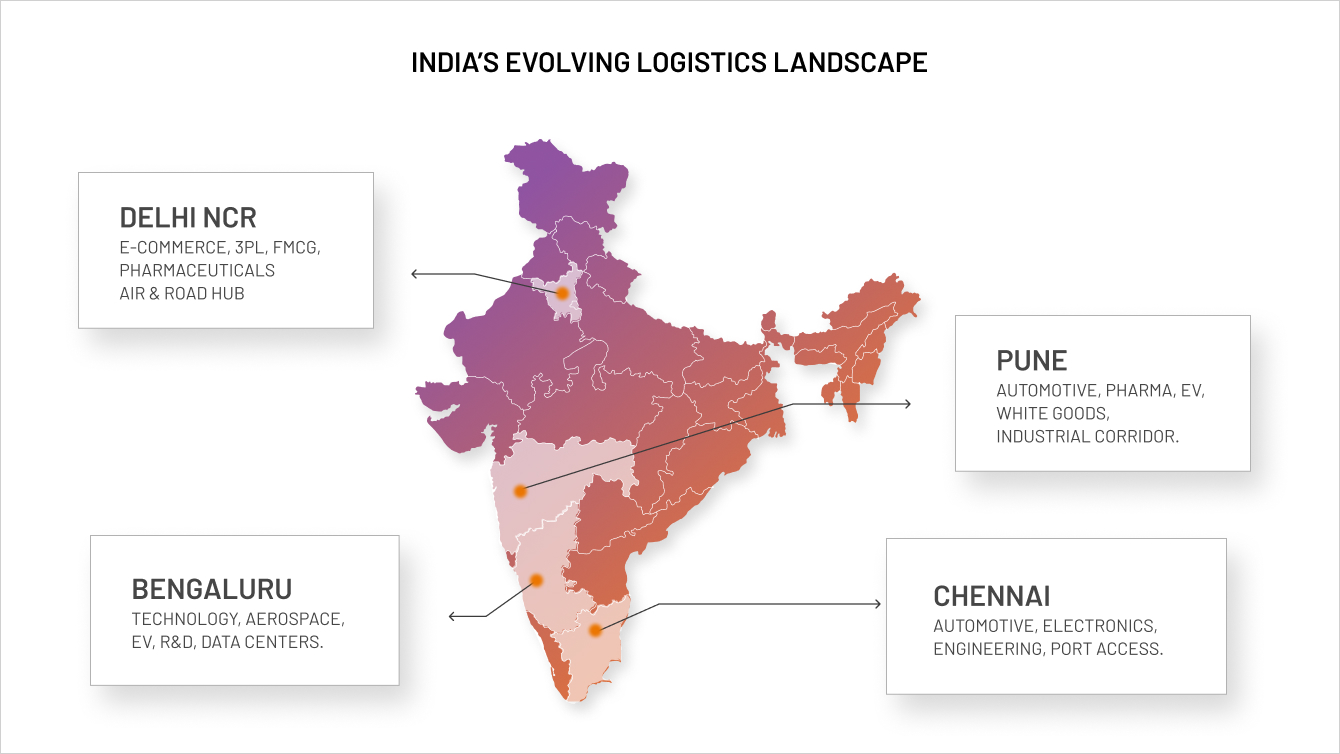
Location decisions fundamentally impact BTS warehouse and factory performance, influencing transportation costs, labor availability, and operational efficiency. India's evolving logistics landscape offers multiple strategic locations, each presenting distinct advantages.
Delhi National Capital Region (NCR) serves as a premier logistics hub benefiting from its position as India's largest consumer market and extensive transportation infrastructure. The region's proximity to Indira Gandhi International Airport provides air cargo access while extensive highway connectivity enables efficient ground transportation. NCR sees strong demand from sectors such as e-commerce, 3PL, FMCG, consumer durables, pharmaceuticals, and electronics, with many companies requiring high-throughput BTS facilities positioned near the consumption base.
Bangalore combines its reputation as India's technology capital with growing manufacturing ecosystems in aerospace, biotechnology, and electronics. BTS warehouses and factories in locations including Hosur serve both domestic distribution and export-oriented manufacturing operations. The region also attracts R&D-driven industries, precision engineering firms, EV component manufacturers, and cloud/data center players requiring specialized BTS builds for high-power and cooling needs.
Chennai's status as a major automotive manufacturing center and proximity to port facilities make it preferred for export-driven businesses and automotive component suppliers. BTS warehouses and factories predominantly serve automotive, electronics, and engineering sectors. Additionally, Chennai attracts heavy industries, logistics operators supporting auto OEM clusters, and global manufacturers in sectors such as solar, industrial machinery, and battery systems due to its strong supplier ecosystem.
Pune is emerging as a hub for industrial growth, benefitting from closeness to Mumbai port facilities while offering more affordable land. The city and its access cum proximity to Industrial Corridors like Chakan MIDC makes it a stronghold for automotive, engineering goods, EV manufacturing, pharmaceuticals, and white goods production, all of which increasingly demand BTS facilities with automation readiness.
Hyderabad is experiencing rapid growth as a cyber-city. Hyderabad's pharmaceutical and biotechnology clusters generate demand for specialized temperature-controlled warehousing. In addition, Hyderabad attracts medical devices, electronics assembly, FMCG distribution, and aerospace component manufacturing, supported by its skilled workforce and expanding industrial corridors.
Quantifiable Benefits Driving BTS Adoption
1. Maximized Space Utilization
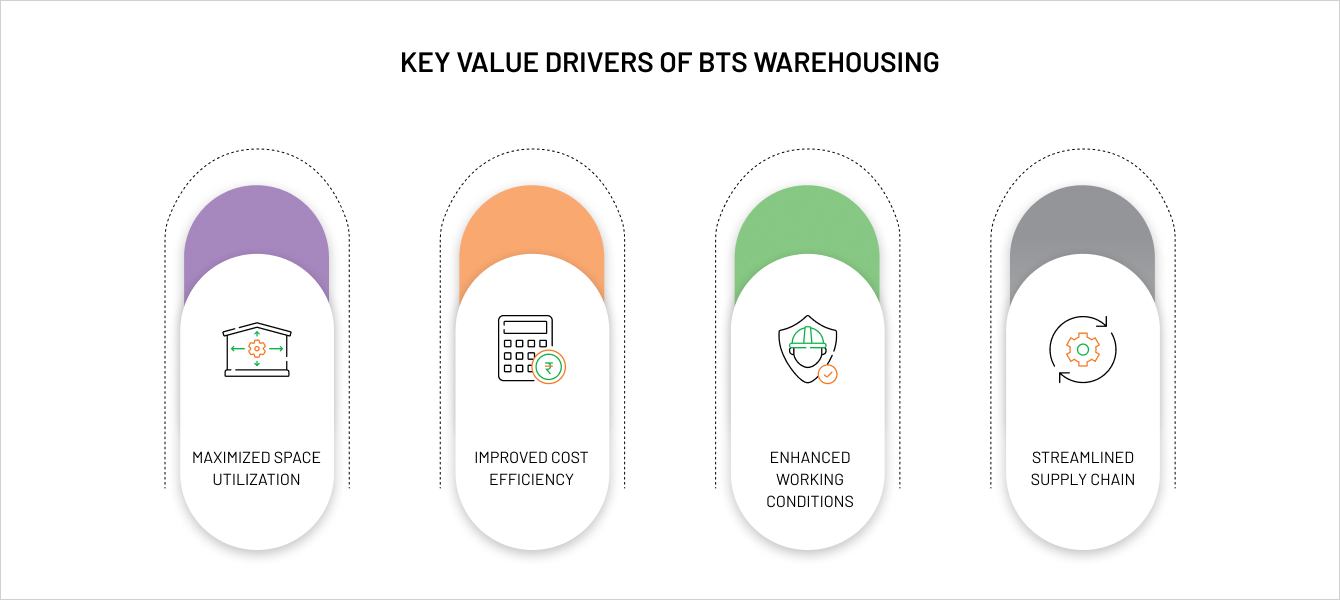
BTS warehousing and manufacturing enables optimal utilization of available space, maximizing storage density while minimizing real estate costs per unit of capacity. According to research published by JLL, demand for BTS warehouses and factories is substantially driven by the need for efficient space utilization, particularly in urban areas where land availability is severely limited. In these constrained environments, the ability to maximize capacity within available footprints delivers immediate economic value. A facility designed with expansion capacity can grow alongside the business, accommodating increased volumes without requiring costly relocations.
2. Improved Cost Efficiency
Optimized layouts reduce labor requirements by improving picking efficiency. Precisely sized facilities avoid paying for excess capacity, reducing rent, utilities, and maintenance expenses. Transportation costs decline when facilities are strategically located near key markets, reducing shipping distances. Advanced automation systems enabled by BTS design specifications reduce labor intensity while improving accuracy. Energy-efficient building systems including insulation, LED lighting, and solar power reduce utility expenses substantially.
3. Enhanced Working Conditions and Employee Productivity
BTS warehousing and manufacturing creates productive, safe, and comfortable working environments through tailored infrastructure. Climate control systems maintain comfortable temperatures year-round. Ergonomic designs reduce physical strain and injury risks. Advanced lighting systems provide uniform illumination that improves visual task performance while minimizing energy consumption. Amenities supporting worker welfare - including break areas, first-aid centers, and on-site conveniences - improve employee satisfaction and retention. According to labor market research, warehouses and factories offering superior working conditions experience lower turnover rates and higher productivity.
4. Streamlined Supply Chain Operations
BTS warehousing and manufacturing strengthens supply chain performance by enabling high-velocity, end-to-end flow of goods through purpose-built process design. Purpose-designed areas for automation, cross-docking, and real-time tracking reduce dwell time and accelerate fulfilment. By integrating these operational elements from the outset, BTS facilities achieve higher throughput consistency and order accuracy than retrofitted generic warehouses. Frost & Sullivan notes that purpose-built facilities deliver materially faster and more reliable supply chain execution.
Navigating BTS Implementation Challenges
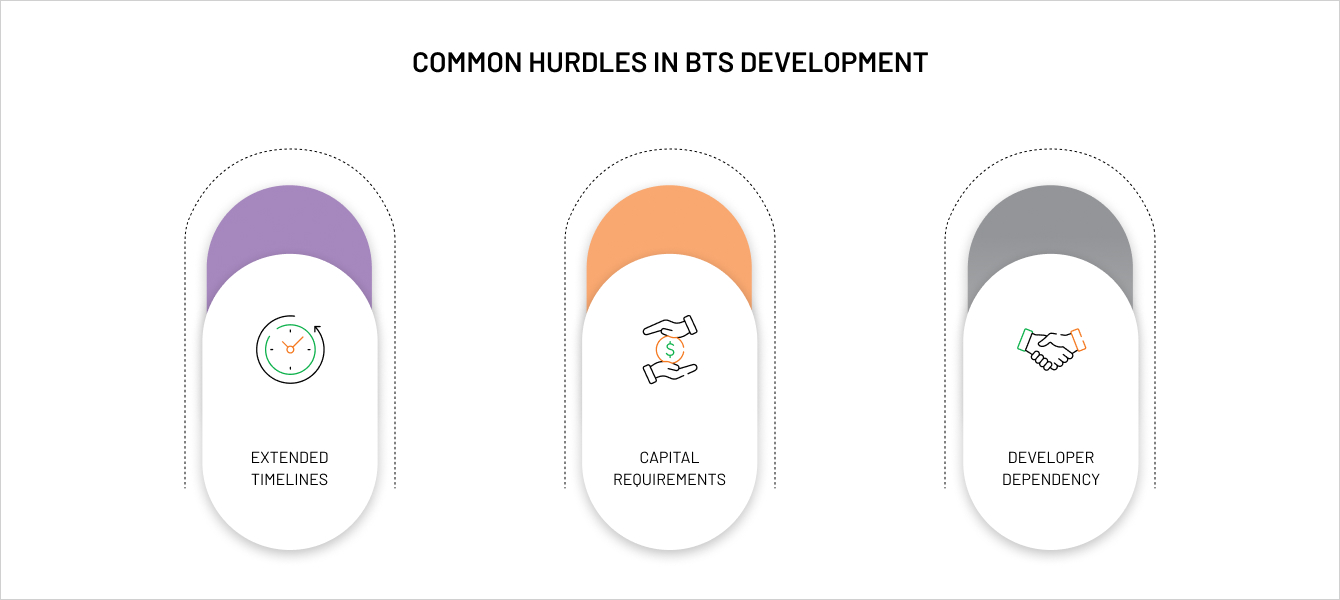
1. Managing Extended Development Timelines
Customization inherently requires time. A BTS warehouse and industrial facility typically require 15 to 18 months from initial planning through completion, substantially exceeding the weeks or months needed to lease existing space. Careful planning and realistic timeline expectations are essential. Businesses should initiate BTS planning well in advance, accounting for all phases including site selection, design, regulatory approvals, construction, and commissioning. Selecting experienced developers with proven track records substantially mitigates timeline risks.
2. Addressing Higher Initial Investment Requirements
The cost of designing and building custom infrastructure exceeds leasing generic space, creating higher initial capital requirements. However, the higher initial investment must be evaluated against long-term value creation. BTS facilities designed optimally for specific operations deliver higher productivity, lower operating costs, and longer useful lives. Financial structuring options including build-to-suit lease arrangements allow developers to finance construction while tenants commit to long-term leases, effectively converting capital investment into operational expenses.
3. Managing Developer Dependencies
Tenants in BTS arrangements rely substantially on developers to execute projects according to agreed specifications, quality standards, and delivery timelines. Rigorous developer selection substantially mitigates these risks. Businesses should evaluate potential developers across multiple dimensions including financial stability, track record of successful delivery, technical expertise, quality of construction practices, and capability to provide ongoing facility management. Grade A institutional developers like Horizon Industrial Parks bring extensive experience delivering BTS projects across diverse sectors, maintaining rigorous quality standards, and providing comprehensive support.
Future Outlook: BTS Warehousing in India's Growth Trajectory
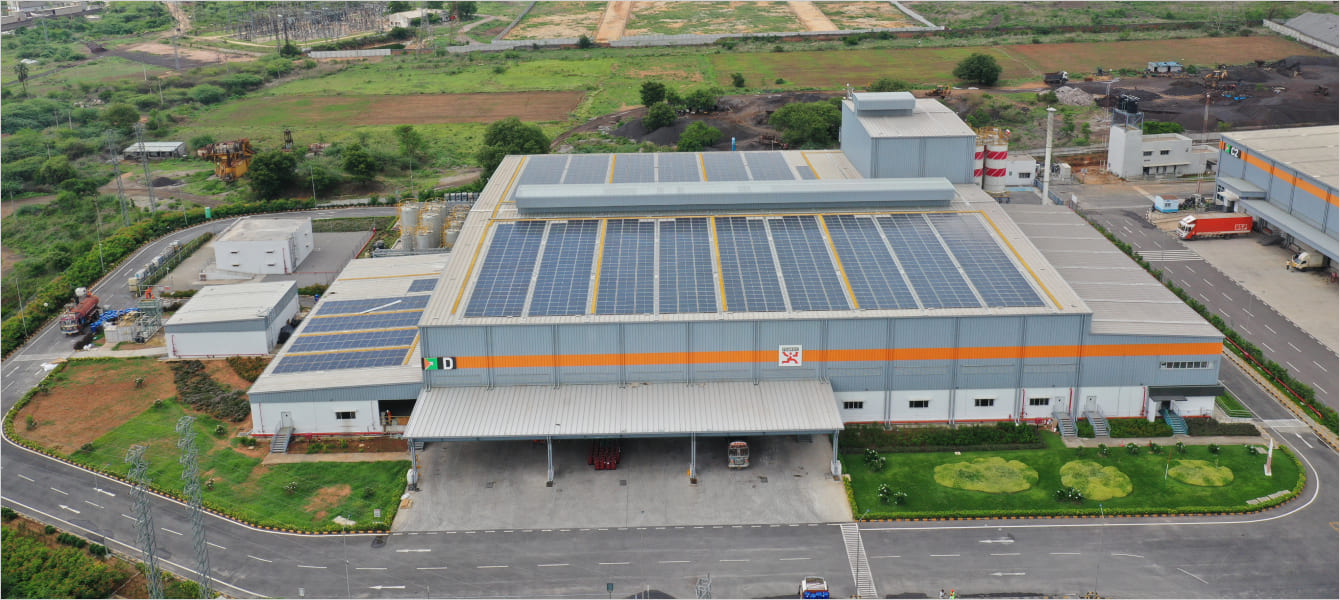
The future of Built-to-Suit (BTS) warehousing and factory development in India remains strong, driven primarily by the country's expanding manufacturing base and the entry of global companies seeking customised infrastructure aligned with international standards. As sectors such as electronics, pharmaceuticals, automotive components, renewable energy, engineering, and precision manufacturing scale production in India, occupiers increasingly prefer BTS facilities that can accommodate specialised machinery, automation systems, cleanroom environments, heavy floor loads, and stringent compliance requirements.
Government programmes supporting domestic and export-oriented manufacturing - such as Make in India and various Production-Linked Incentive (PLI) schemes - are accelerating this shift. These initiatives encourage both Indian and multinational companies to set up new plants, expand capacity, or relocate parts of their global supply chains to India, thereby increasing demand for bespoke factories and warehousing infrastructure designed around process-specific workflows.
Improving connectivity through large-scale infrastructure development, including dedicated freight corridors, new industrial corridors, and upgraded highway networks, strengthens India's attractiveness as a manufacturing and distribution base. These developments further support occupiers looking for strategically located BTS facilities that minimise transit time, improve supply chain reliability, and integrate seamlessly with national logistics networks.
As India's industrial ecosystem becomes more sophisticated and manufacturing moves up the value chain, BTS facilities will play an increasingly critical role in enabling companies to establish purpose-built operations that support advanced production, higher automation intensity, and globally benchmarked quality standards.
The Horizon Advantage: Purpose-Built Excellence
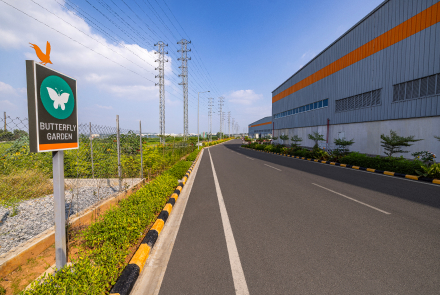
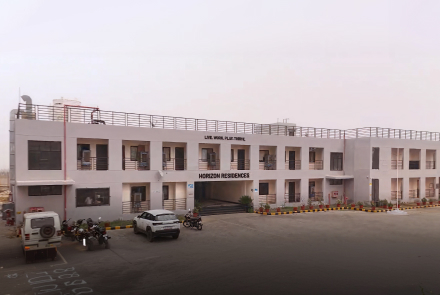
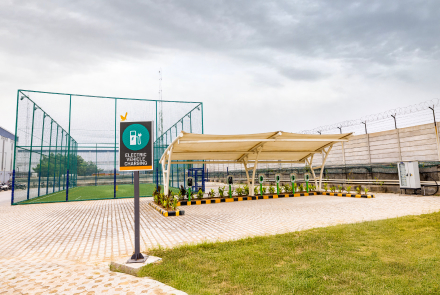
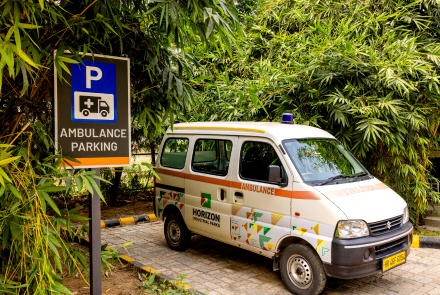
At Horizon Industrial Parks, we have established ourselves as leaders in delivering purpose-built warehousing and industrial infrastructure that meets global standards while addressing the specific needs of diverse Indian industries. Our pre-engineered buildings offer superior construction quality, incorporating advanced materials, structural systems, and building technologies that deliver long-term performance and operational reliability.
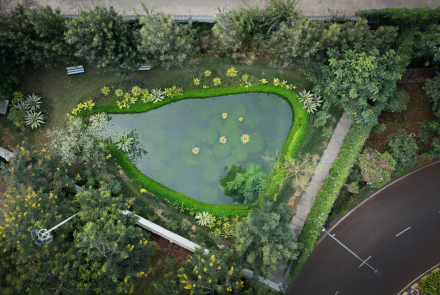
Whether customers are OEM suppliers for automotive, defence and aerospace components, e-commerce companies requiring high-velocity fulfillment capabilities, manufacturers of electronics or chemicals, or cold chain solution providers, our built-to-suit warehouses and factories and manufacturing facilities are tailored precisely to operational requirements. We prioritize creating safe, sustainable, and ergonomic workplaces recognizing that employee wellbeing directly influences productivity. Our facilities incorporate barrier-free designs ensuring accessibility for differently-abled individuals, on-site staff accommodations, first-aid centers, ambulances on standby, urban forests, sports arenas and practical conveniences including ATMs and EV charging infrastructure.
With 46 industrial, logistics and in-city parks spanning 60 million square feet in 10 key Indian markets, Horizon Industrial Parks possesses the geographic reach, technical expertise, financial strength, and customer-centric approach to deliver BTS solutions that exceed expectations. Our customer testimonials consistently highlight our responsiveness, quality of construction, comprehensiveness of regulatory support, and commitment to long-term partnership.
Conclusion: Strategic Infrastructure for Competitive Advantage
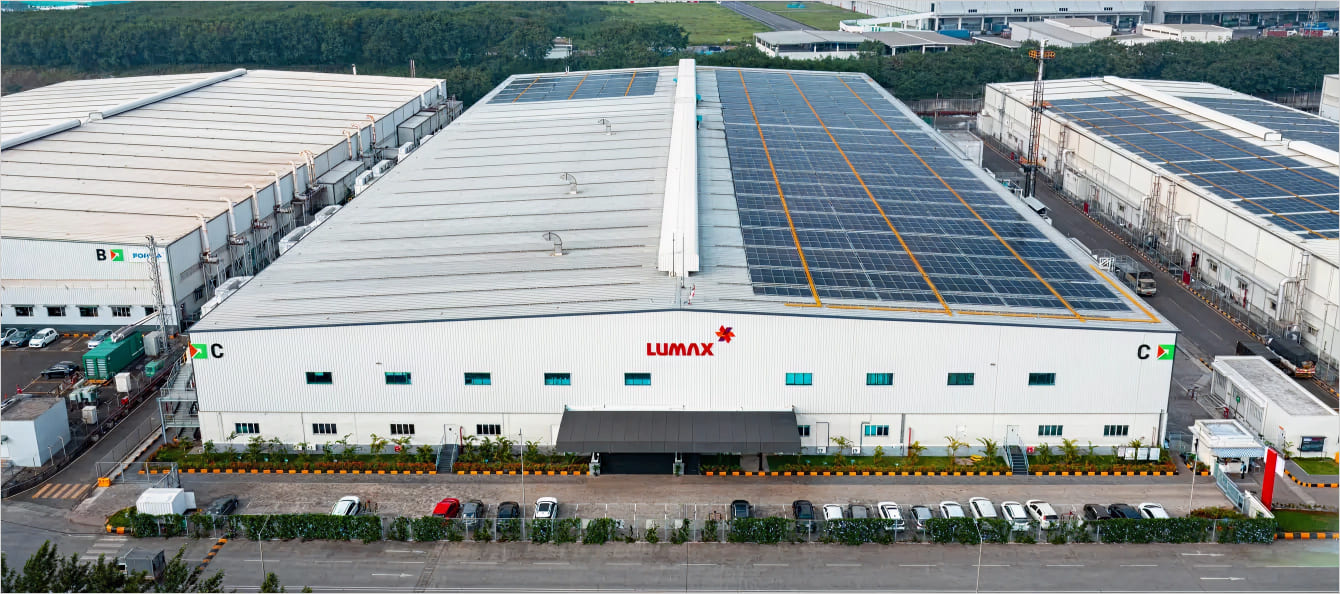
Built-to-Suit warehouses and industrial facilities represent far more than a storage space or production facility. They constitute strategic assets designed specifically to enhance operational efficiency, reduce costs across multiple dimensions, support business growth and scalability, ensure regulatory compliance, and create working environments that attract and retain talented employees. As India's warehousing and industrial sector continues its remarkable evolution, BTS warehouses and factories are positioned to play increasingly pivotal roles in meeting the unique requirements of diverse industries navigating rapid change and intensifying competition.
For businesses seeking to scale operations, streamline supply chains, or establish operational infrastructure optimally matched to strategic objectives, partnering with experienced developers for BTS warehouse and factory solutions can prove transformational. With appropriate location selection, thoughtful design incorporating operational requirements and future growth capacity, incorporation of sustainability features, and comprehensive support from developers committed to long-term success, these warehouses and factories provide sustainable competitive advantages in today's dynamic marketplace.
The future of Indian warehousing and industrial manufacturing is being written in the purpose-built facilities rising across the nation's industrial corridors and logistics hubs. Organizations that embrace BTS solutions position themselves to operate more efficiently, respond more nimbly to market changes, serve customers more effectively, and build operations on infrastructure foundations that enable rather than constrain their ambitions.
References