Nobody buys a refrigerator based on its finish alone. An energy label offers customers a common yardstick by which to compare different models, although the electricity bill may still depend on their use. Industrial parks face a similar test. Industrial and logistics developers can promise many amenities and efficient utilities, but customers need a common way to measure and verify those claims. Green certifications provide that starting point. Their value lies not only in the decisions they influence before a tenant moves in but also the value they add to profitability once operations commence.
What are green certifications, and who provides them?
Green building certifications check real estate assets like residential, commercial complexes and industrial parks or individual buildings against sustainability standards. Related ratings can also assess entire portfolios owned and managed by developers for organization-wide ratings. In this blog, we are evaluating three sustainability frameworks widely recognised in India for industrial and logistics parks.
First, IGBC certification, which comes from Confederation of Indian Industry’s Indian Green Building Council. Its Green Logistics Parks and Warehouses system assesses eligible industrial parks and warehouses for planning, transport, energy, water and worker facilities.
Second, LEED certification, which was developed by the US Green Building Council and is reviewed by Green Business Certification Inc. Used globally, it assesses building design, construction and operations. LEED is not restricted to single buildings; it offers other pathways to cover larger communities as well.
Third, the GRESB assessment, established in 2009, originates from the Global Real Estate Sustainability Benchmark for real estate and infrastructure. It is a strong portfolio/ investor ESG benchmark recognised globally across real estate companies and funds, covering developments and operating assets.
How IGBC, LEED and GRESB differ in assessment frameworks?
For industrial and logistics real estate, the key question is not which framework is “better”, but what each one is meant to demonstrate. These frameworks work at different levels and speak to different stakeholders. Some are better suited to proving the sustainability of a specific asset, while others are more useful for showing the ESG strength of an entire platform or portfolio.
| What is the difference? | IGBC | LEED | GRESB |
|---|---|---|---|
| What it mainly tells you | How well an industrial or logistics asset aligns with sustainability priorities in India | How well an asset meets an internationally recognised green building standards | How well a real estate company, fund or portfolio manages ESG performance |
| Main level of assessment | Asset or park level | Asset, building or project level | Company, fund or portfolio level |
| Most useful for | Indian industrial parks, logistics parks and warehouses | Standalone assets or parks that need stronger global recognition | Owners, developers and funds that need investor-facing ESG credibility |
| Most relevant audience | Occupiers, park users, local stakeholders and project teams | Multinational tenants, global customers and international partners | Investors, lenders, shareholders and capital partners |
| Where it adds the most value | Local market fit, asset positioning and India-specific credibility | Global comparability, brand value and tenant confidence | Portfolio transparency, ESG reporting and investor communication |
| Best used in leasing discussions when | The occupier wants practical proof of sustainability in the Indian operating context | The occupier has global ESG or procurement standards | The discussion is at platform or sponsor level rather than for one building |
| What it evaluates | Sustainable site planning, water efficiency, energy performance, materials & resources, indoor environmental quality, and innovation. | Integrative design process, location & transportation, sustainable sites, water efficiency, energy & atmosphere, materials & resources, indoor environmental quality, innovation, and regional priority. | ESG management and performance, including governance, risk management, stakeholder engagement, energy, GHG emissions, water, waste, health & safety, and social indicators. |
| Output, Rating / scoring structure | Point-based certification resulting in Certified, Silver, Gold, or Platinum ratings (depending on the rating system). | Points-based certification resulting in Certified, Silver, Gold, or Platinum levels. | Score out of 100, peer benchmarking, quintile ranking, and GRESB Star Rating (1-5 Stars). |
The practical difference is simple: IGBC and LEED are more useful when the focus is the asset or a park, while GRESB becomes more relevant when the focus is the investment platform behind the asset. For industrial developers and operators, this distinction helps in choosing the right framework for leasing, market positioning and investor communication.
When should industrial developers pursue green certification?
Sustainability standards matter to industrial developers because they shape expensive decisions early, support leasing, and help control operating costs after handover.
At the concept design stage, before budgets and layouts are fixed, sustainability standards help teams apply industry best practices and make high-impact choices with fewer costly revisions. For example, drainage requirements would determine where recharge pits belong, a solar-ready roof needs adequate structural capacity, building design could factor in natural light and ventilation, and wastewater treatment would need an operating budget along with infrastructure.
Green ratings also strengthen commercial positioning by helping developers attract suitable tenants and address procurement requirements. JLL, an international property consultant, in their ‘Beyond the Box’ August 2026 Survey, found sustainability requirements in nearly two-thirds of requests for proposals (RFPs) received by leading Indian 3PL operators.
After occupation, the value of in-built sustainability standards becomes measurable: for instance, developers can review common-area electricity bills and compare the cost of reused water with purchased freshwater to see whether the infrastructure is helping control expenses, including service charges where applicable. Those same records also support portfolio comparisons used by investors through GRESB.
In practice, developers should seek certification as early as concept design. IGBC certification may begin with pre-certification for eligible projects and continue with review of completed work, while LEED certification can be pursued for existing assets or by selecting the relevant design or operations pathway. Developers can also apply for the annual GRESB assessment by providing records from development projects and measured data from occupied parks.
What do tenants gain from green-certified industrial parks?
Tenants get a clearer basis for comparing their facilities and operating costs. Shared lighting and water reuse can influence common-area charges, depending on actual consumption and lease terms. Workforce amenities and sanitation improve everyday working conditions.
Institutional grade, green-certified industrial and logistics parks that are built to high standards of sustainability, also support a tenants’ net-zero goals by reducing operational emissions, improving data visibility, and lowering the cost and complexity of decarbonization.
| How the Park helps | Why it matters for Tenants |
|---|---|
| Lower energy demand through efficient design | Reduces electricity use for lighting, HVAC, ventilation, and common infrastructure, lowering Scope 2 emissions where grid power is used. |
| Rooftop solar / renewable energy integration | Gives tenants access to cleaner power, directly supporting electricity decarbonization. |
| Efficient building envelope and systems | Cuts baseline energy intensity, which is one of the first steps in any net-zero roadmap. |
| Water efficiency and recycling systems | Lowers resource intensity and supports broader ESG targets |
| Low-carbon mobility and site planning | Better circulation, EV readiness, and transport planning can help reduce logistics- and commuting-related emissions. |
| Waste management infrastructure | Helps tenants improve waste diversion and reduce emissions associated with waste handling. |
| Measured performance and reporting discipline | Green-certified parks often have stronger monitoring systems, making it easier for tenants to track consumption and report progress credibly. |
| Healthier and better-managed buildings | Supports operational continuity and stakeholder expectations, which helps sustain long-term decarbonization programs. |
A green-certified park gives tenants a lower-emissions operating platform from day one – tenants do not need to solve every efficiency and infrastructure challenge on their own after move-in.
How has Horizon applied these frameworks?
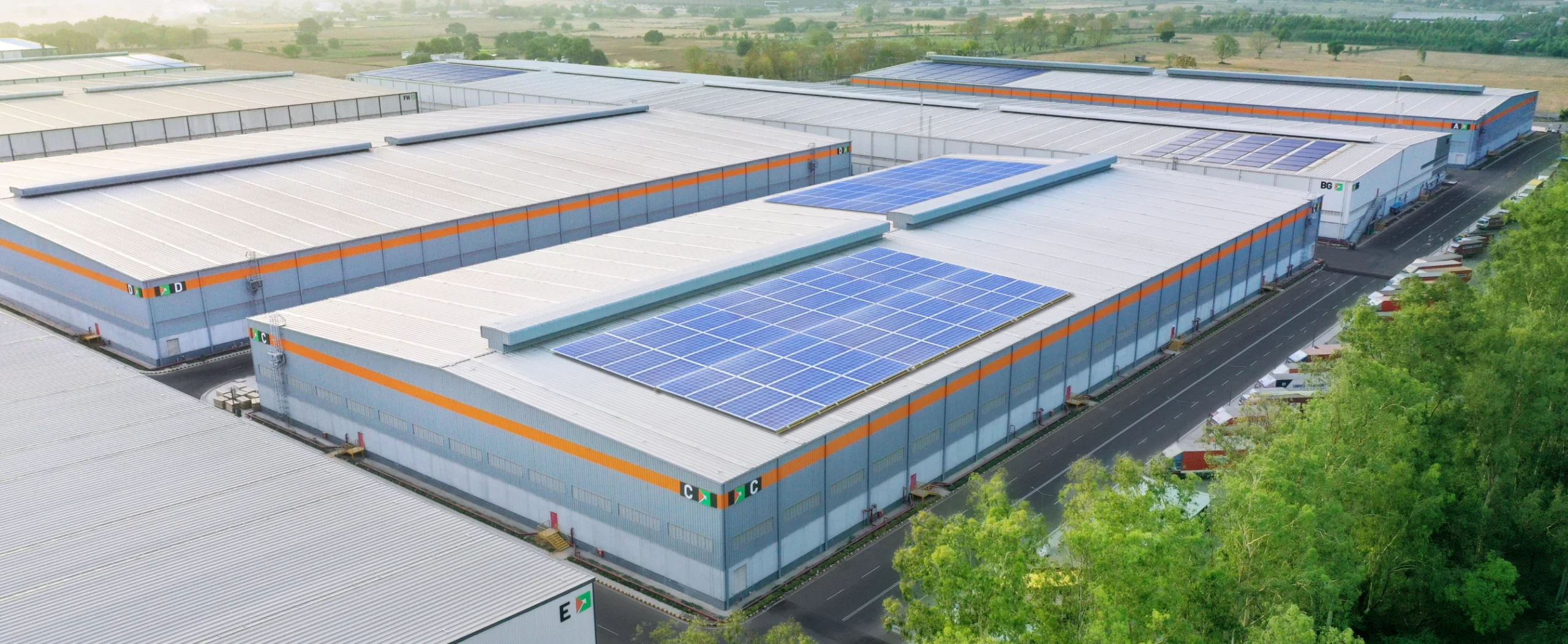
Horizon Industrial Parks has variously applied for IGBC, GRESB and LEED certifications. 21 assets within the Horizon Industrial Parks’ portfolio spanning 41.86 msft are IGBC Platinum certified / pre-certified. In its second year of assessment in 2026, Horizon scored 99.2 in GRESB Development and 91.3 in Standing Investments, earning five-star ratings in both, alongside Global and Asia Regional Sector Leader recognition in Development Assessment In addition, Horizon’s head office in Mumbai is LEED Platinum certified and the company is amongst the first industrial & logistics space to achieve all four ISO certifications for quality, environment, health & safety and information security. Together, the park ratings, project standards and portfolio results offer different evidence of Horizon’s ESG performance.
In industrial real estate, sustainability standards are no longer just badges of intent; they are practical tools for building trust, improving transparency and