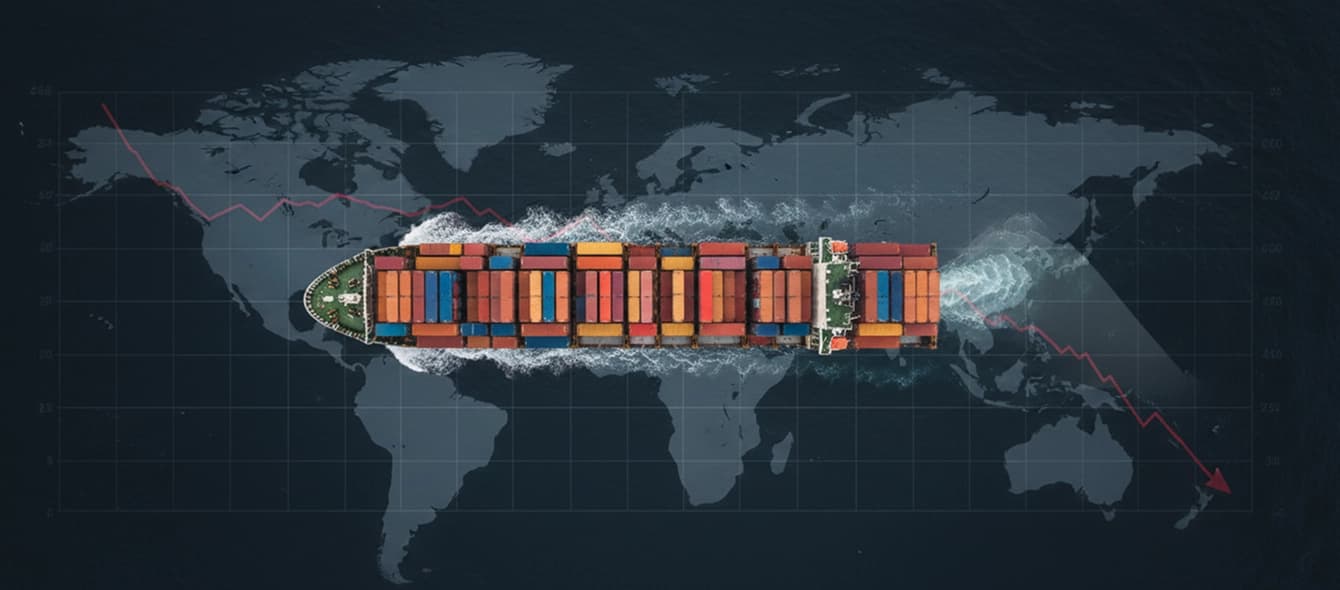




As climate volatility transforms India’s supply chain, resilience is no longer a safety net – it’s a strategic edge.
Synopsis: Rising climate volatility is reshaping India’s supply chains, making resilience a strategic necessity for industrial and logistics parks. Climate-responsive site selection, resilient infrastructure, elevated utilities, and continuity-focused design are becoming critical to reducing disruptions and safeguarding operations. As extreme weather intensifies, climate-resilient logistics parks will play a key role in ensuring reliable, future-ready supply chains.
How Are Climate-Resilient Industrial And Logistics Parks Being Designed For India’s Unpredictable Weather?
In recent months, India has been reminded of just how unpredictable the climate has become. In October 2025, Cyclone Montha battered the east coast with winds touching 100 kmph, forcing evacuations and bringing parts of Andhra Pradesh to a standstill. In Vijayawada, incessant rain turned arterial roads into rivers, disrupting transport routes and rail operations. Before that, in May 2025, Cyclone Remal in West Bengal and record floods in North India tested infrastructure from highways to warehouses.
For India’s supply chain – the invisible network that moves the nation’s economy – these weren’t isolated incidents. They were warning signals.
Industrial and logistics parks sit at the intersection of climate exposure and economic continuity. Every hour of downtime, every delayed truck, every factory or warehouse floor under water – it all adds up to one simple truth: resilience now defines competitiveness.
Why Is Climate Volatility Becoming A Major Risk For India’s Supply Chains?
The impact of climate change on industrial operations is no longer theoretical.
Temperatures are rising, storms are intensifying, and rainfall is becoming hyper-local and unpredictable.
Heatwaves are now longer, more frequent, and more intense – with temperatures crossing 45°C in multiple manufacturing belts. Extreme rainfall events in India have increased by over 45% in the last two decades. Nearly 40% of India’s industrial clusters lie in flood-prone districts. These networks are now operating in a climate environment defined by extremes. The consequences are visible across every link of the value chain:
- Flooding of industrial zones interrupts operations, damages stored goods, and compromises warehouse floors and machinery.
- Transport disruptions – from waterlogged highways to halted rail sections – slow the movement of goods and fracture continuity.
- Heat stress and rising temperatures reduce workforce efficiency and push energy consumption to new highs.
- Insurance and compliance pressures mount as regions repeatedly exposed to climate events become costlier to insure and regulate.
And each of these pressures sends ripples outward – a single warehouse outage in Andhra Pradesh can slow production timelines in Pune or a damaged arterial road in Gujarat can delay export shipments bound for global markets. For businesses, the cumulative cost becomes tangible – lost hours, damaged inventory, missed delivery commitments, rising premiums, and reduced investor confidence.
Building climate resilience into logistics and industrial parks and infrastructure is therefore not environmental altruism – it’s economic strategy.
It’s how India can de-risk its manufacturing ambitions and ensure that Make in India doesn’t pause every time the skies change.
How Are Industrial And Logistics Parks Transitioning From Resistance To Climate Resilience?
In the last decade, India’s industrial and logistics parks are transitioning from just being well-located to being engineered for efficiency, scalability, and cost advantage.
Moreover, the smartest industrial parks are not just operationally efficient – they are also sustainable and climate-aware.
Location Intelligence: Beyond Land Availability & Access
Choosing land today is no longer just about access, zoning, or connectivity. It demands:
- Elevation analysis
- Hydrological and flood-path mapping
- Soil absorption and natural drainage patterns
- Proximity to water bodies
- Long-term climate stress projections
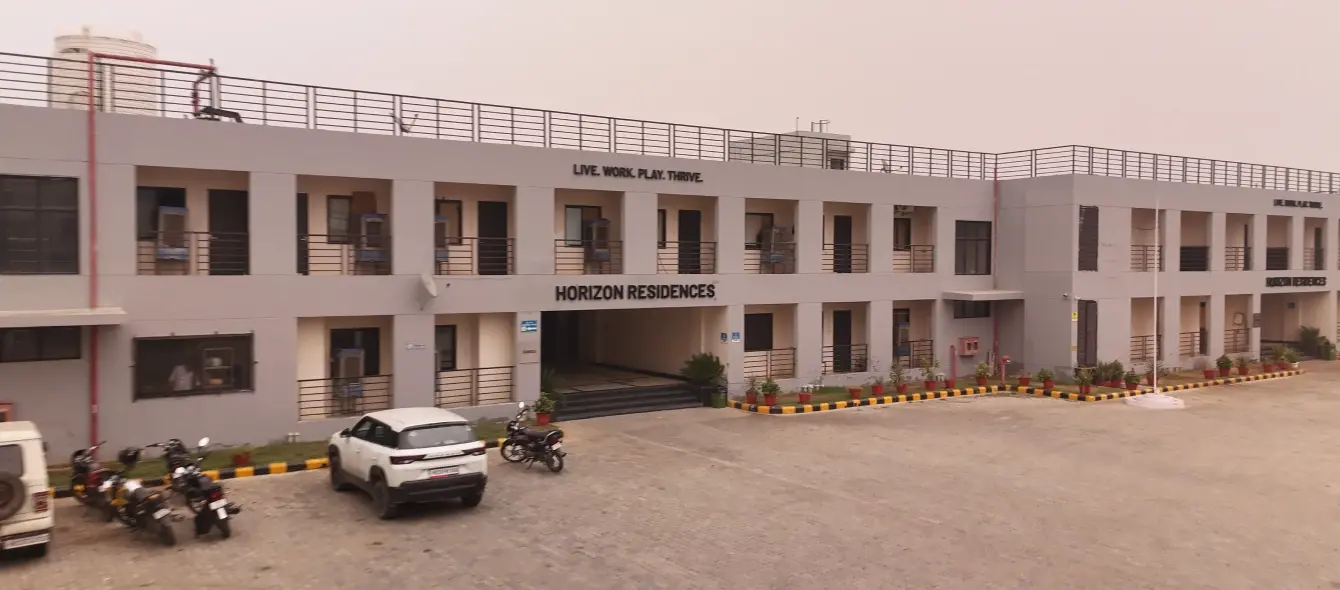
At Horizon, every master plan begins with data-driven site intelligence – ensuring that the park remains functional even under extreme weather scenarios.
Climate-Responsive Master Planning
Resilience starts on the drawing board – because the ability of a park to function during and after extreme weather is determined long before construction begins. It begins with how the land is assessed, how water is directed, how utilities are protected, and how movement within the site is planned. When these fundamentals are designed with climate stresses in mind, continuity becomes a natural outcome – not an emergency response. Key design principles include:
- Widened and graded stormwater channels to eliminate waterlogging.
- Natural buffers, retention ponds, and engineered wetlands that act as shock absorbers during intense rainfall.
- Rainwater harvesting systems that integrate sustainability with emergency preparedness.
- Green belts and permeable surfaces that reduce heat islands and improve percolation.
- Future-proof drainage systems engineered for high-intensity rainfall and gravity-fed discharge to eliminate stagnation.
- Large, landscaped water-absorption zones and engineered ponds that manage excess water and strengthen site-level resilience.
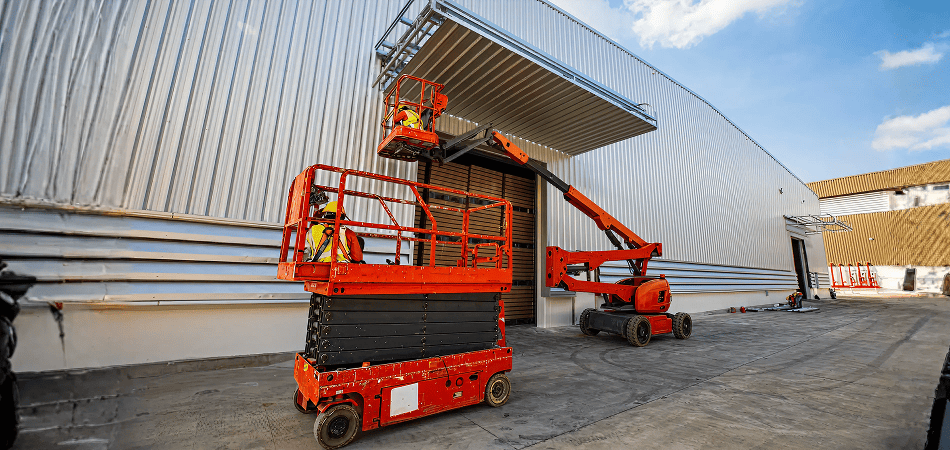
- Elevated Infrastructure, in high-exposure regions ensures that even during severe weather, core systems remain operational:
- Elevated plinths and raised internal road networks enabling operations to continue even when surrounding areas are submerged.
- Critical utilities like electrical substations, telecom ducts, and IT networks are positioned above historical and projected flood levels.
- Secure service corridors are designed to protect essential infrastructure during extreme weather.
Designing for Continuity
In addition to withstanding a climate event, true resilience also reflects in how quickly operations can resume afterwards. For occupiers, business continuity means confidence and reliability, even when external conditions fail. At industrial and parks, some proactive measures that can aid in business continuity include:
- Dual-substation power architecture and integrated backup systems, ensuring uninterrupted operations during outages.
- Solar power integration, improving energy resilience during grid disturbances.
- Rapid restoration protocols and trained emergency response teams, enabling occupiers to restart within hours rather than days.
- Redundant access roads, optimised drainage, and robust connectivity, ensuring supply chain stability even under duress.
Looking Ahead: A Shared Responsibility
Climate resilience can’t be built in isolation. It demands collaboration – between government, industrial developers, occupiers, and insurers. It calls for shared climate impact data, better urban drainage and logistics planning, and incentives for sustainable design; it demands collective action.
Government
- National industrial policy must integrate climate-risk mapping and mandate resilience benchmarks for new industrial parks.
- State governments can incentivise climate-adaptive construction through fast-track approvals and fiscal benefits.
- City and district authorities must upgrade logistics infrastructure and connectivity, urban drainage, storm-water capacity, and zoning regulations.
Industry & Occupiers
- Climate data-sharing frameworks can help developers access real-time risk insights.
- Public–private partnerships can accelerate the adoption of renewable energy, circular water systems, and resilient road networks.
Insurers
- Climate-linked underwriting must evolve to reward resilient infrastructure.
Why Is Climate Resilience Becoming A Strategic Imperative For Industrial And Logistics Parks?
Climate resilience, therefore, is not just a sustainability goal – it is a national economic imperative. As India expands its warehousing and manufacturing footprint, we must recognise that each new industrial and logistics park is also a climate decision. How it’s planned today determines how it performs tomorrow.
At Horizon, we believe resilience is more than protection. It’s progress – the ability to move forward, confidently, even when the skies turn grey.