



India’s relationship with food hasn’t changed—how it reaches consumers has.
What appears to be the rise of cloud kitchens is actually a deeper structural shift in India’s urban consumption and logistics landscape. Food delivery is no longer just a culinary business; it is a time-critical, infrastructure-led system shaped by location, proximity, and operational speed.
Cloud kitchens are rewriting the economics of food by replacing frontage with access, dining rooms with delivery radii, and visibility with logistics efficiency.
From Restaurants to Distributed Consumption Networks
Traditional restaurants were built around visibility and walk-in footfall. Cloud kitchens inverted this logic entirely. By removing the dining room, operators eliminated high real estate costs and repositioned kitchens closer to demand clusters rather than high streets.
This shift coincided with the rapid adoption of delivery platforms, where consumer expectations moved decisively toward speed, reliability, and choice. The critical question changed from “Where is the restaurant?” to “How fast can food reach me?”
Cloud kitchens emerged as the most efficient answer to this new demand model.
Why Cloud Kitchens Fit India’s Urban Reality
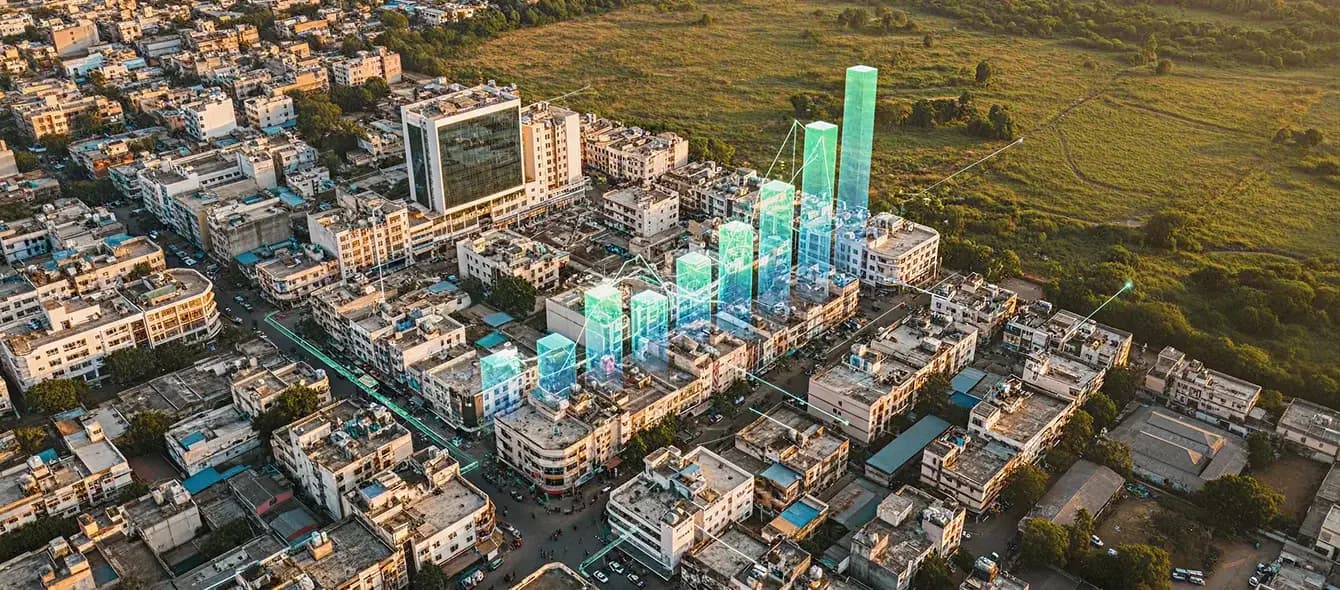
Indian cities are dense, fragmented, and unevenly distributed. Consumption clusters around residential neighbourhoods, offices, hospitals, student zones, and mixed-use pockets—often far from traditional high streets.
A single dine-in outlet captures only limited demand. Strategically located cloud kitchens, however, can serve multiple high-density clusters within short delivery windows, improving order density and unit economics.
This model also aligns with Indian consumer behaviour—high willingness to experiment, paired with expectations of consistency, affordability, and speed. Leading players such as Rebel Foods, Curefoods, EatClub, and Box8 scaled not because of novelty, but because they combined data-led site selection, centralised operations, and multi-brand platforms to place kitchens precisely where demand, delivery time, and efficiency intersect.
The Unspoken Reality: Cloud Kitchens Are Logistics Assets
At their core, cloud kitchens function less like restaurants and more like urban distribution nodes.
Their success depends on:
-
- Predictable inbound supply flows
- Efficient storage, waste, and hygiene systems
- Frictionless access for delivery partners
- Peak-hour circulation that avoids congestion
Small inefficiencies compound rapidly in a delivery-first model. This is why cloud kitchens increasingly resemble urban warehousing—their competitiveness is driven by location, access, compliance, and scalability rather than menus alone.
Infrastructure, once an afterthought, becomes a defining advantage.

Horizon’s Perspective: In-City Infrastructure That Moves at Food Speed
Food delivery is among the most time-sensitive categories in urban logistics. It demands infrastructure fundamentally different from peripheral warehouses or high-street retail.
Horizon InCity Centers are designed as multi-use urban warehousing facilities located within dense residential clusters, providing access to over 20 million end-consumers within a 10–30 minute driving radius.
Four infrastructure multipliers define cloud kitchen performance:
Proximity
In-city locations reduce delivery times, improve rider efficiency, and strengthen customer experience—without increasing marketing or discount spends.
Access & Circulation
Lunch and dinner peaks allow no room for congestion. High-frequency inbound and outbound movement requires clear access, efficient layouts, and rapid turnaround capability.
Compliance & Institutional Reliability
As the sector matures, food safety, fire norms, waste management, and labour compliance become non-negotiable. Organised, compliant infrastructure enables confident scaling and long-term risk reduction.
Scalability
Today’s single-brand kitchen may evolve into a multi-brand, quick-commerce, or institutional catering operation. Flexible in-city infrastructure allows businesses to grow within the same ecosystem as models evolve.
What the Next Phase of Cloud Kitchens Will Demand
The future of cloud kitchens will not be defined by how many kitchens exist, but by how intelligently they are placed.
As margins tighten and competition intensifies:
-
- Data-led site selection will replace rapid expansion
- Operational resilience will outweigh footprint size
- Integration with last-mile logistics will become essential
Growth will come from opening the right kitchens, not more kitchens.
Closing Thought
The cloud kitchen revolution is often framed as a story of food and technology. In reality, it is a story of cities—and how efficiently they move goods, people, and services.
At Horizon, we believe the future of food delivery in India will be shaped by infrastructure that understands urban rhythms and operates at their pace. In a delivery-first economy, the most powerful ingredient is not on the menu—it’s location, access, and intelligent design.
Explore In-City Infrastructure with Horizon
Discover how Horizon InCity Centers support cloud kitchens and urban consumption businesses with future-ready, compliant, and scalable infrastructure.