


Overview
Horizon Industrial Parks’ expansion strategy encompasses the acquisition of strategically located brownfield and greenfield assets across India. Leveraging Blackstone’s global expertise, Horizon enhances these assets by implementing superior infrastructure, ensuring compliance, and fostering safer, healthier workplaces with a positive Environmental, Social, and Governance (ESG) impact.
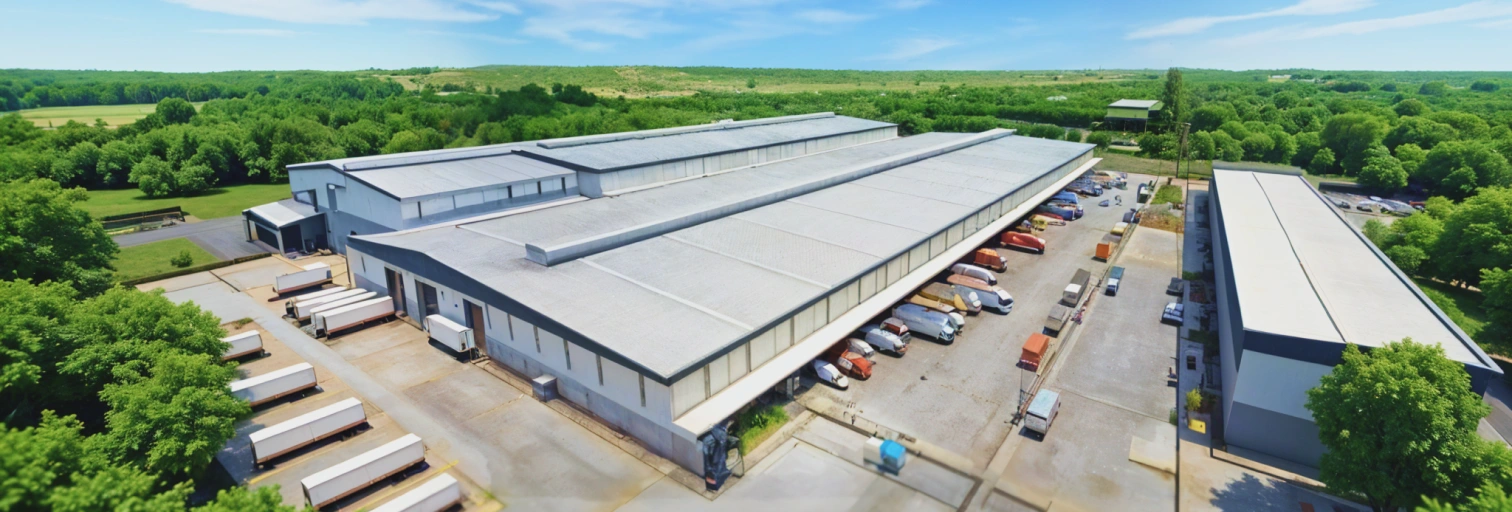
Building upon the successful transformation of Horizon Industrial Park Chakan II, we applied the same strategic redevelopment approach to our project in Patancheru, Hyderabad. This initiative underscores our commitment to enhancing India’s industrial infrastructure by converting underutilised assets into state-of-the-art, Grade A facilities.
Located in the TSIIC Yelumala region near Nagulapalli railway station, Patancheru is a burgeoning industrial hub on Hyderabad’s outskirts. Recognising the area’s strategic significance for manufacturing, e-commerce, and 3PL activities, we embarked on a comprehensive redevelopment plan for our 26-acre park, aiming to align it with global standards and sustainable practices.
Problem:
When Horizon Industrial Parks acquired the 26-acre site in Patancheru, located in the TSIIC Yelumala industrial belt near Hyderabad, the park showed promise due to its location but lacked the essential infrastructure and amenities expected of a modern Grade A facility. Despite its strategic proximity to key industrial zones and the Nagulapalli railway station, the site suffered from poor traffic flow, subpar sustainability provisions, and limited support for safety, security, and employee well-being. This gap presented both a challenge and an opportunity—to transform an underwhelming, operational site into a benchmark facility for efficient, future-ready, and human-centric logistics infrastructure.

Objectives
The objective behind redeveloping the Patancheru industrial park was to holistically transform the site into a Grade A logistics facility aligned with Horizon’s vision of quality, compliance, sustainability, and human-centric design. This meant not only upgrading physical infrastructure but also enhancing operational efficiency, employee experience, and environmental performance. The core goals guiding this transformation thus included:

Build robust, compliant infrastructure to support scale and resilience.

Streamline vehicle movement and traffic circulation and enable organised and optimised space utilisation across the facility.

Deliver tangible ESG outcomes through sustainable design by improving energy efficiency and reducing the park’s carbon footprint.

Support tenant productivity and satisfaction through other value-added initiatives.
SOLUTION:

We approached the redevelopment of Patancheru Park as more than a retrofit—it was a deliberate reimagining of what an industrial space could and should be. Guided by a clear objective and grounded in our core pillars of delivering right fitted, hands-on, efficient and sustainable solutions, we undertook a series of targeted interventions across the site. Each measure was more than a physical upgrade but a strategic response to existing limitations, designed to future-proof the park and unlock greater value for tenants, workers, and the wider ecosystem. Here’s how we brought this vision to life—one solution at a time:
Upgraded Roads for Enhanced Vehicle Movement:
The entrance gate area of Patancheru Park has undergone significant improvements with an optimised road gradient and an upgraded road curvature to enhance vehicle movement. The adjusted gradient ensures a smoother transition for trucks and heavy vehicles, reducing strain on engines and minimising acceleration fluctuations. The improved road curvature facilitates seamless turning, reducing the risk of vehicle skidding and congestion. Additionally, all site roads have been marked with road lane markings, directional arrows, designated pedestrian crossings, rumblers, and chevron marking. These upgrades mean improved traffic flow, reduced vehicle wear and tear, and enhanced safety for drivers.
Sustainable Measure for Resource Conservation:
Patancheru Park has integrated multiple sustainability measures to enhance resource conservation and environmental efficiency. The site already had two rainwater harvesting pits, which was a good start. But to better cater to the scale of the facility, we plan to bring the total to 12—out of which five have been constructed. This initiative contributes to the groundwater recharge and reduces surface run-off.
A 500-kW solar panel system has been installed to promote renewable energy usage and significantly lower the park’s carbon footprint once operational. This installation can potentially mitigate 505 tCO₂e which is equivalent to planting approximately 23,000 trees. Dedicated EV charging points—two for four-wheelers and four for two-wheelers—encourage the adoption of electric vehicles, reducing dependency on fossil fuels. The park is equipped with LED streetlights, which consume significantly less power compared to traditional lighting systems, reducing overall electricity usage and maintenance costs.
These initiatives, aligned with IGBC (Indian Green Building Council) requirements, contribute to sustainable operations by conserving water, promoting clean energy, and supporting eco-friendly transportation within the park. This park is thus Platinum rated.
Dedicated Parking Spaces:
We have developed paved truck parking area designed to accommodate heavy vehicles efficiently, ensuring smooth traffic flow and reducing congestion. The parking spaces are clearly marked using thermoplastic paint, which provides durable, high-visibility lane markings for easy navigation. Additionally, we introduced dedicated parking spaces for four-wheelers and two-wheelers which needed to be strategically placed within the existing layout of the premises. These now allow for organised parking and contribute to better utilise these spaces across the park.
Waste Management Measures:
We integrated an efficient waste management system with a dedicated compost pit and waste segregation area to promote environmental sustainability. The compost pit enables the conversion of organic waste into nutrient-rich compost, reducing landfill waste and supporting green landscaping within the park. The segregation area ensures systematic sorting of waste into biodegradable, non-biodegradable, and recyclable categories, streamlining waste disposal and recycling efforts.
This park utilises a manual irrigation system to ensure controlled and efficient water distribution. A smart water meter has been installed to further optimise water consumption and enhance its monitoring across the premises. This advanced system provides real-time data on water usage, helping identify any inefficiencies, detect leaks, and ensure water is used only when necessary.
Enhanced Security and Surveillance:
To safeguard both people and assets, the Patancheru Park now features a comprehensive, 24/7 CCTV network covering all access points, internal roads, loading bays, and peripheral boundaries.
All feeds are centrally monitored from our operations control room, with enhanced visibility on the activities for the on-site personnel so that they may call for timely intervention or reinforcements if required. This proactive approach has not only reduced security incidents by over 40% but also given tenants and their workforce complete peace of mind, knowing that every corner of the park is under vigilant watch.
Enhanced Greenery:
Patancheru Park’s green makeover goes beyond aesthetics—strategically placed landscaped islands now break up paved expanses, guiding traffic flow while creating pockets of shade and cooler microclimates. Native varieties like Lemon grass, Golden Bamboo and flowering shrubs like Tecoma ,Tecomaria ,Caeslapinea, Cestrum reduce runoff and improve soil health, while vertical elevations—clad in climbers like Lonicera , Thunbergia ,Pyrostegia —act as living insulation, lowering adjacent wall temperatures up to 5 °C. Together, these elements—amounting to15% green cover—boost the on-site biodiversity, attract pollinators, and enhance air quality by capturing dust and CO₂. More than just “pretty views,” these landscaped features support worker well-being, reduce the heat-island effect, and reinforce our commitment to sustainable, human-centric design.
Meaningful Social Initiatives:
Horizon’s vibrant social ecosystem is designed to bring people together through meaningful interactions and shared experiences. Events like Agility Day, Safety Week, and Cricket Tournaments are hosted regularly, offering tenants and their teams a chance to unwind, bond, and collaborate outside the workplace. Coupled with festival celebrations, health-awareness activities, and community-building activities, these recreational initiatives strengthen relationships and promote a sense of camaraderie, ensuring the park thrives as both a professional and social community.
Conclusion
In just a few months, the upgradation of Horizon Industrial Park Patancheru has more than delivered. Smoother road gradients and clear lane demarcations have cut average truck turnaround times, while our solar panels are set to offset nearly 15-20% of the park’s power needs. Enhanced lighting and CCTV coverage has driven a drop in safety incidents, and tenant feedback consistently praises both the efficiency gains and the uplifting work environment created by green spaces and community events.
By marrying operational rigor with sustainable design and human-centric amenities, we’ve transformed the site into a best-in-class logistics hub—one that delivers clear cost savings, bolsters ESG credentials, and sets a new standard for what industrial parks can achieve.
Let’s Build the Factory You Need
Not the One You Have to Settle For
Talk to our team to explore how Horizon’s network can give your business an edge.
Have questions or ready to explore? Let’s connect and talk about how we can help your business grow.